English
 Français
 Deutsch
 Русский
 Türkçe
 Español
 لالعربية
 Português
 Italiano
 ไทย

CO2 Laser Cutting Machine for Packaging: Boxes, Dies and Edges
release time:
2026-10-20
What a CO2 laser cutter changes in a packaging shop: corrugated board, acrylic and dense card, die-cut versus laser-cut edges, and which table to buy.
Ask a packaging shop why they moved from a die cutter to a co2 laser cutting machine for packaging industry and you get two answers. The first is changeover: a new box shape used to mean a new steel rule and a trip to the die shop. The second is short runs, which a die cutter cannot do economically.
The second answer is the real one. Dies are amortised over tens of thousands of presses. Below that, the rule cost sits in the unit price and nobody wants to say the number out loud.
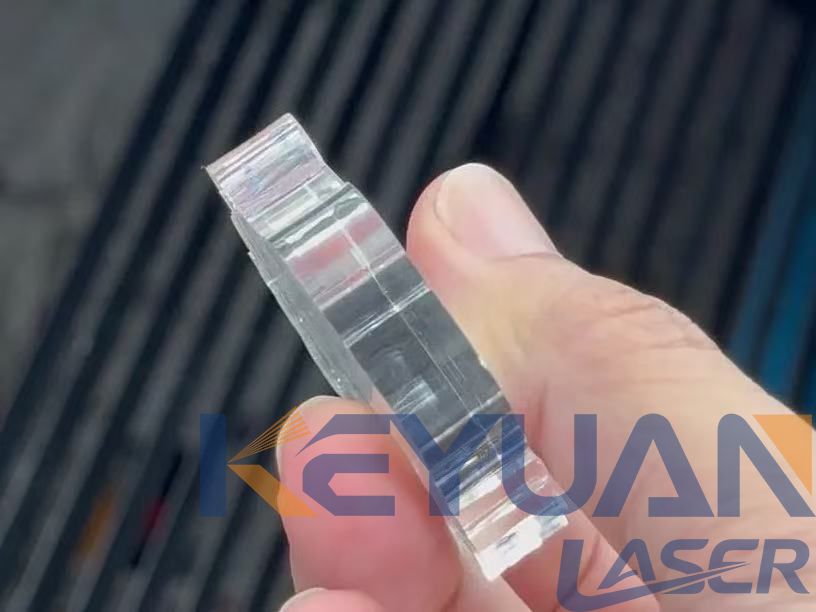
What a laser actually changes is the edge. A mechanical die leaves a compressed, slightly torn edge on corrugated board. A laser leaves a clean, slightly darkened edge that sells better on a display box, and on acrylic it leaves a polished-looking seam with no router burr at all.
What Packaging Actually Gets Cut
A large format co2 laser cutter is the machine for this work, but packaging is a strange mix of materials and they behave nothing alike under a 10.6 micron CO2 beam. The table below is the one we work from when a customer asks what their machine can and cannot take.
| Material | Typical use in packaging | How a CO2 laser handles it | Watch out for |
|---|---|---|---|
| E-flute and B-flute corrugated | Retail display trays, mailer boxes | Cuts cleanly in one pass, edge stays crisp | Must be flat; warped board burns the edge brown |
| Kraft and greyboard | Sleeves, book-style boxes | Very clean, low smoke | Heavy board needs more power and more gas |
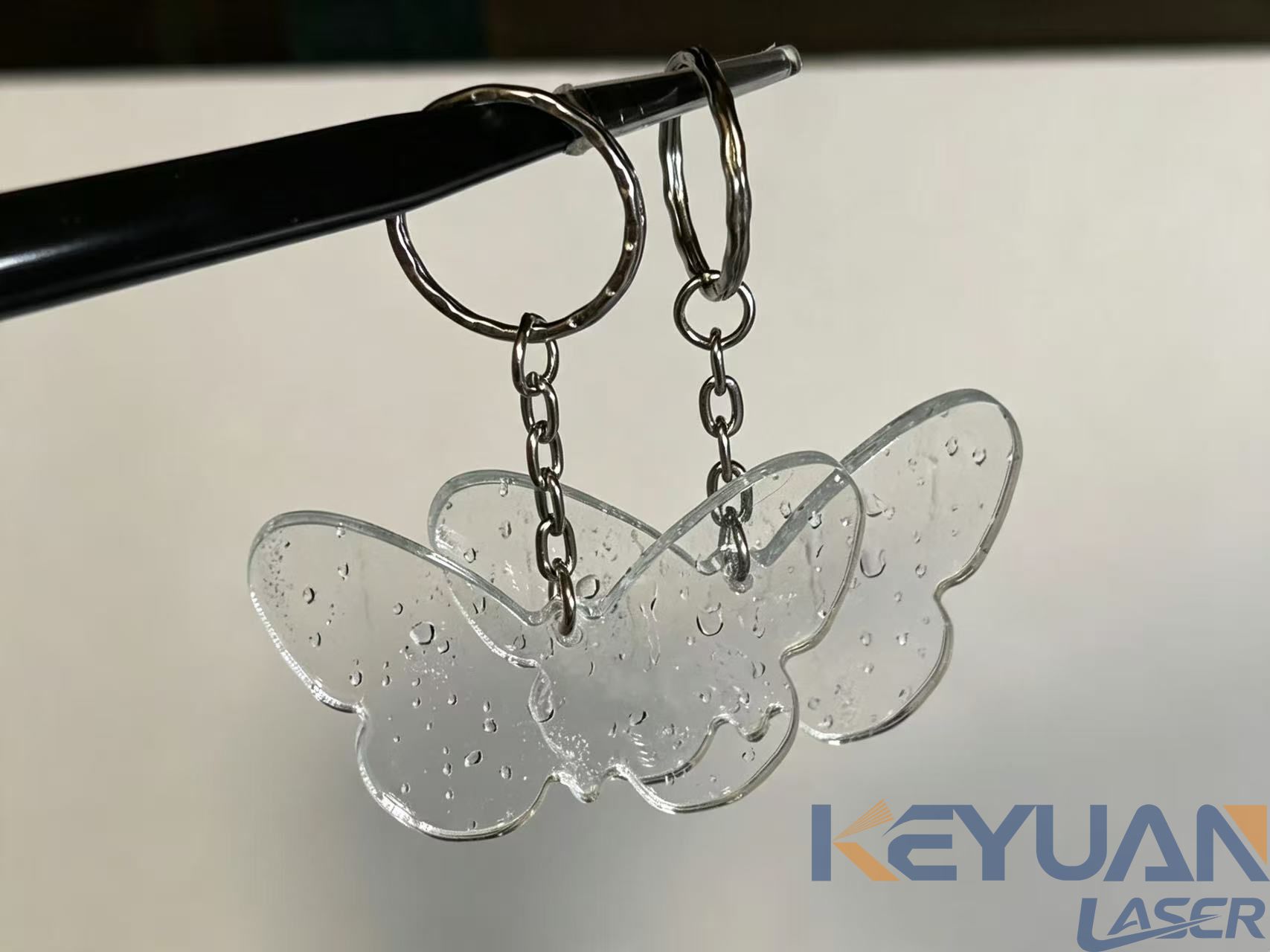
| Acrylic (PMMA) | Display stands, clear packaging | Polished edge, no burr, no router pass | Melts and re-solidifies; needs air assist or it looks frosted |
| Dense cardboard | Cosmetic and electronics inserts | Excellent at thin and medium density | Thick greyboard needs 150W and up |
| Foam and EVA | Foam inserts, edge protectors | Melts to a sealed edge | Chlorinated foam releases gas — check your extraction |
The line worth remembering: packaging is mostly thin, flat, non-metallic material. That is the easiest possible job for a CO2 laser, which is why this application works so well and why the marketing rarely mentions it.
The Bed You Buy Decides Half of It
Two table options exist and they are not interchangeable.
A laser cutter for corrugated board needs support across the full width, which is what decides the table. A blade table is slats with gaps between them: the gaps vent smoke and let small pieces drop out, but a thin sheet sags into the slot and the cut goes crooked. It is the cheaper option and the right one for solid board, acrylic and dense card.
A honeycomb table is a steel honeycomb that holds small parts down by vacuum while letting air move through. It costs more, resists heat better, and is the only sensible choice if you cut corrugate, fabric-wrapped board, or anything light enough to warp.
Most packaging shops end up wanting both eventually. Our usual advice is to start with whichever material is 80 percent of your volume, because a vacuum honeycomb table only helps if you run extraction underneath it.
Two other decisions matter. The transmission system — belt, ball screw or rack and pinion — decides how accurately a 1.3 m box repeats when you cut the second one. Belt drive is fine for board; ball screw is what you want if you also engrave serials.
Power, Air and the Edge You Are Selling
Published power on these machines runs from about 80 W to 600 W. For packaging, the number that matters is not the top of the range. A 130 W tube cuts E-flute all day; you only need 200 W or more for greyboard, thick acrylic, or occasional plywood inserts.
Air assist is the feature people skip and then regret. Blowing air across the kerf — the width of the cut itself — carries the melted material out of the beam path instead of letting it settle back as a brown line. On acrylic the difference is stark: without air assist the edge looks frosted, with it the edge looks polished.
Gas assist follows the same logic: a small nitrogen line keeps combustion off the surface so the cut edge stays the colour of the material.
| Buying decision | Steel die | CO2 laser | Winner |
|---|---|---|---|
| Up-front cost for one shape | Rule plus die shop trip | None | Laser |
| One-off or short run of 500 | Rule cost spread over almost nothing | Machine time only | Laser |
| 50,000+ of one shape | Rule cost per unit approaches zero | Machine time every unit | Die |
| Edge on E-flute | Compressed, slightly torn | Clean, lightly darkened | Laser |
| Edge on acrylic | Needs a separate router pass | Polished in one cut | Laser |
| New shape changeover | Days, plus the rule | Minutes, in the software | Laser |
| Hard wood or very thick board | Depends on the rule | May need 200 W and more air | Depends |
The honest limitation: a laser will never match a steel rule on a very high-volume single SKU. If one box shape accounts for 80 percent of your volume and runs for years, a die still wins on unit cost. The laser wins on everything else.
Where the Laser Loses to a Die
Three cases, and none of them are close.
First, corrugate that is not flat. A warped board burns the edge long before the beam reaches the far side. This is a material-handling problem, not a machine problem, and no laser setting fixes it.
Second, PVC and vinyl. A CO2 beam decomposes chlorine-bearing plastics into hydrochloric gas, which corrodes the machine and irritates everyone nearby. If your packaging is vinyl, the laser is the wrong tool and no amount of extraction makes it acceptable indoors.
Third, foil, metallised film and laminated structures. A reflective surface sends the beam back up the column and the lacquer or metallisation burns. These go to a knife plotter instead.
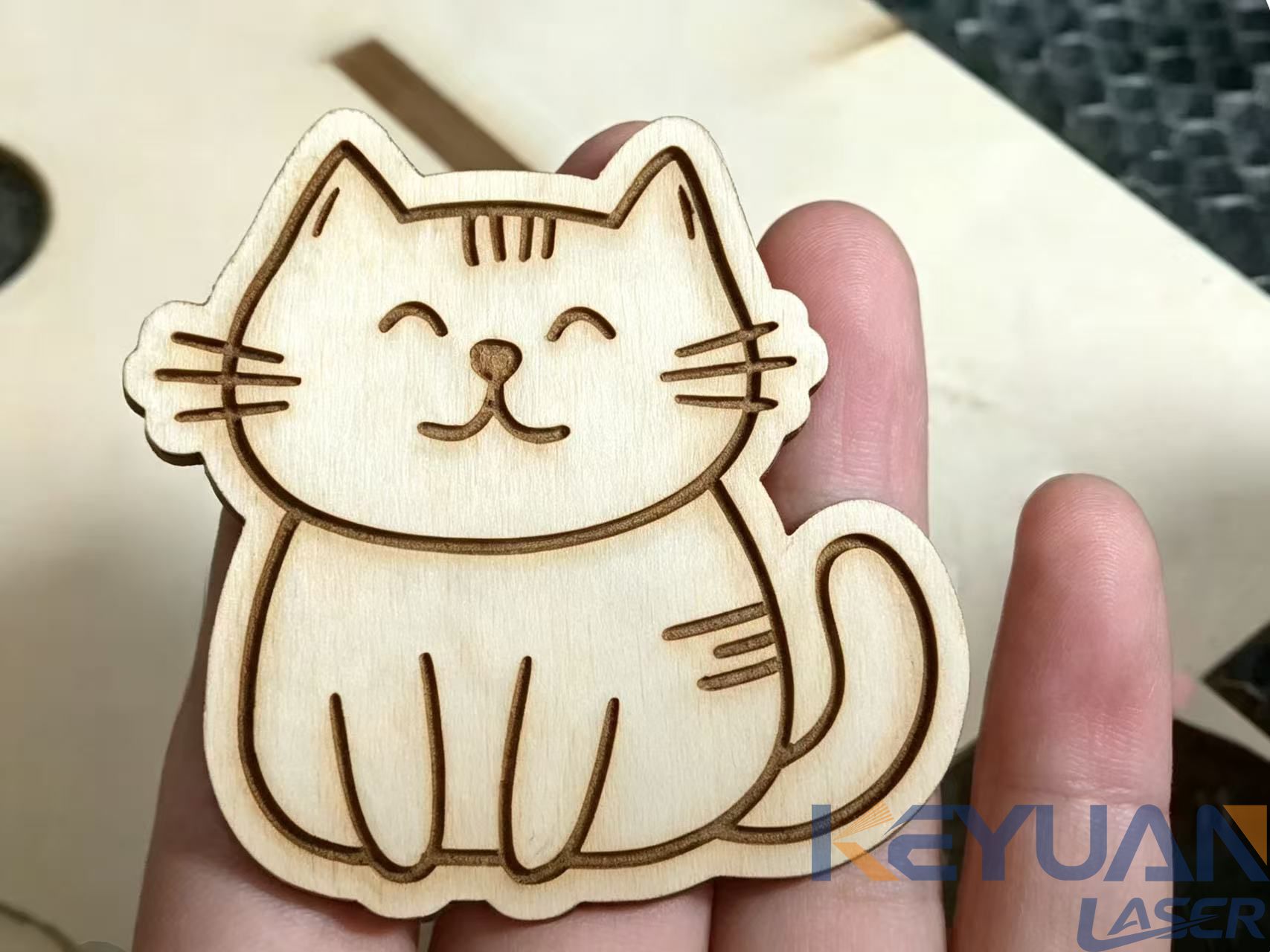
Everything else — paper, board, corrugate, acrylic, wood inserts, leather, fabric, foam — is a good job for this machine.
One more thing if you sell finished boxes. A laser edge is clean but not perfectly square across a 1.3 m span unless the machine is level. Check the bed monthly with a machinist level — a bed that has drifted a millimetre shows up as a taper on the cut box, and your customer will blame the artwork.
FAQ
A wider bed is the other obvious step up — the same family runs to 1500 x 3000 mm — and for full-sheet display boards it is the difference between one pass and two. The large format cutting range is worth a look if your parts fill more than half a 1.3 m bed.
Can a CO2 laser cut corrugated board?
Yes, E-flute and B-flute cut cleanly in one pass, provided the board is flat and you run it on a honeycomb table with air assist. Heavy double-wall corrugate is a different story and is usually better done on a die.
Is a laser cheaper than a die for small runs?
For anything under a few thousand pieces, yes — the rule cost is gone entirely. Above roughly fifty thousand pieces of one shape, the die usually wins on unit cost and the laser should be reserved for variation and prototypes.
Can it cut acrylic display packaging without a router pass?
That is one of the strongest cases for a laser. The edge comes out polished with no burr and no second operation. Add air assist, or the edge will look frosted from the melt and re-solidify.
What about foil-wrapped or laminated boxes?
Skip the laser. A reflective or metallised surface sends the beam back up the column and burns the coating. Use a knife plotter for those, and keep the laser for paper, board, acrylic and wood.
The Short Version
Packaging is thin, flat, non-metallic material — the easiest job a CO2 laser gets. Buy for the bed before the wattage: honeycomb if you cut corrugate, blade if you cut solid board and acrylic. Add air assist or the edges will sell the machine for you, in the wrong way.
label:
related news


E-mail address:
Hotline:
Copyright © 2012-2026 Keyuan Laser All rights reserved