English
 Français
 Deutsch
 Русский
 Türkçe
 Español
 لالعربية
 Português
 Italiano
 ไทย
Laser Cleaning Machine for Shipbuilding and Repair
release time:
2026-10-17
Why shipyards are replacing abrasive blasting with laser cleaning: rust on hull plate and tanks, the safety argument, and the jobs a laser should not take.
A shipyard runs a grit-blasting tent next to the dry dock, and every winter the yard loses weeks to it. Blasters cannot enter a partly loaded vessel, they cannot work alongside a coating crew, and the containment they need costs more than the equipment. Meanwhile a second crew is chipping rust off tank walls by hand with a grinder and a vacuum.
The argument for a laser cleaning machine in a yard is not that it beats blasting. It is that it reaches work blasting cannot.
Why Ship Repair Is a Different Cleaning Job
Marine cleaning has one property that ruins most industrial assumptions: the steel is not flat and it is not uniform.
Hull plate goes from light surface rust near the waterline to a solid mill scale at the keel, and between those it passes through ten years of touch-up paint. Tank interiors are worse, because the inside of a ballast tank has condensation running down the walls and rust blooms that are wet again by the time you finish the section next to it.
| Where the work is | What you find | What that does to the method |
|---|---|---|
| Hull plate, topsides | Light to moderate surface rust | The easy case; one pass, little residue |
| Keel and waterline | Hard mill scale over old paint | Slow, and grinding tools slip on curved steel |
| Ballast tank interiors | Wet rust, condensation, confined space | Blasting needs ventilation a tank does not have |
| Tank walls and baffles | Scale plus old coating, access by manway | Nobody fits a blast hose through a manway |
| Around coating repairs | Localised rust at coating edges | Small area, and blasting means re-blasting the neighbours |
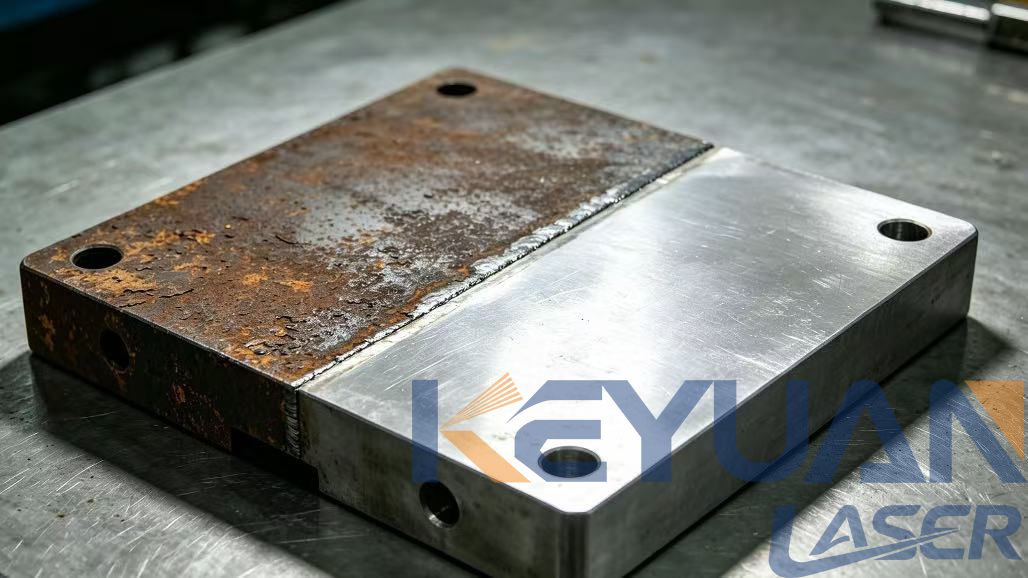
That last row is the one yard managers notice first. Blasting one square metre next to good coating means containing the overspray and protecting everything around it. A laser touches only what you point it at.
The Safety Argument Is the Real Argument
Confined space in a tank is where abrasive work kills people, and it is not close.
Blasting inside a ballast tank creates airborne abrasive plus heavy metal plus old coating fragments. The coating on a ship is often a lead-based or chromate type from an earlier owner, and making that dust airborne is a serious exposure. A yard has to run forced ventilation, air monitoring, and an entry team for the duration.
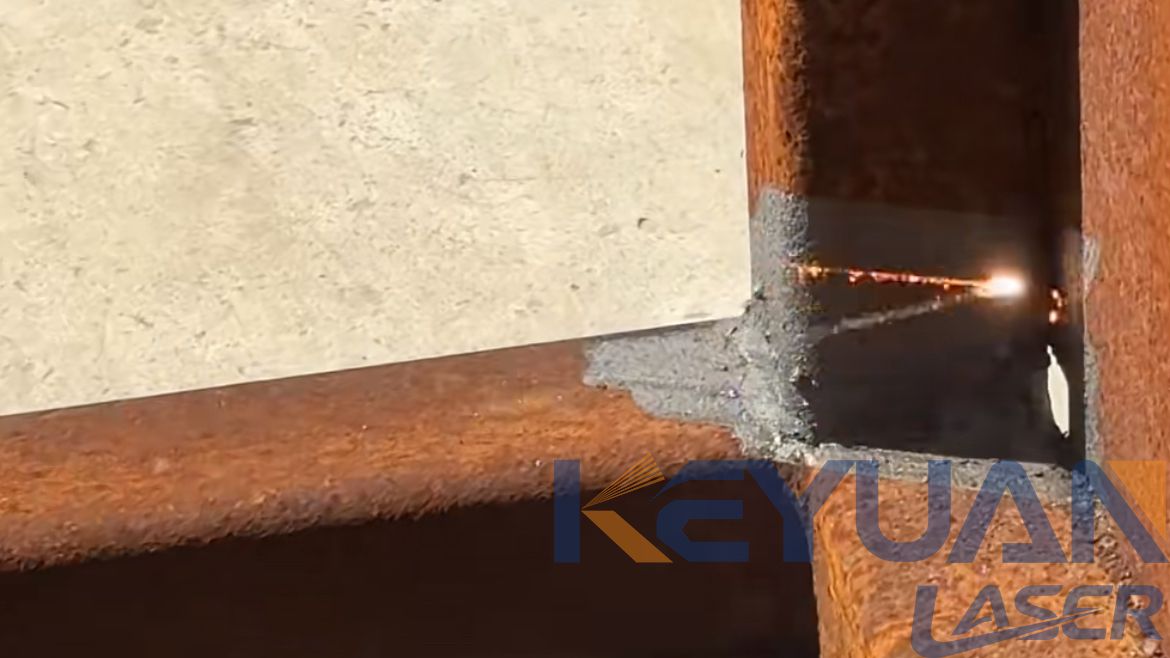
A laser cleaning machine for shipbuilding changes the arithmetic. There is no abrasive, so the dust load drops to the coating residue itself. There is no loud impact noise, so the hearing protection burden and the neighbouring crew's exposure both go. And the machine does not require the vessel to be stripped back to bare metal to work next to it.
None of this makes it risk free. The fume still has to be extracted, and the laser light is genuinely dangerous to eyes. What it does is turn the hazard profile from "abrasive plus confined space" into "fume plus optical", which most yards find far easier to manage.
What the Work Actually Costs
The comparison yard managers want is not speed. It is what the job costs when it goes wrong.
| Method | Setup and containment | Crew exposure | Typical residue left behind |
|---|---|---|---|
| Abrasive blasting | Enclosure, recovery system, air monitoring | High dust, high noise | Reblast to a white metal standard |
| Hand grinder and vacuum | Low setup | Silicosis risk, fatigue | Inconsistent, patches missed |
| Wire brush | Low setup | Long hours, repetitive strain | Rust returns in weeks |
| Laser cleaning | Fume extraction and a marked zone | Fume, optical | None to clean off |
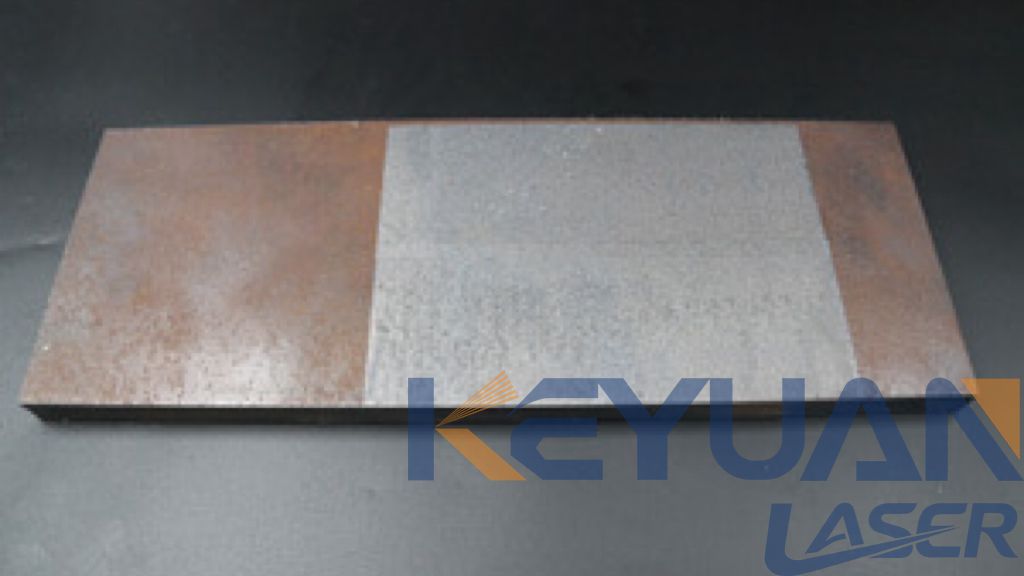
The column that decides most jobs is the last one. Blasting to a white metal standard is expensive, and it is also required if the coating system demands it. But on the majority of yard work — touch-up areas, interiors, fittings, decks, temporary repairs — the coating spec does not demand white metal, so the abrasive process is doing damage nobody asked for.
For planning, a handheld unit with a 300 mm scan line covers roughly a square metre an hour of light surface rust at working speed. A tank wall is not a hull. Budget by the tank, not by the vessel.
Where a Laser Is the Wrong Tool
Four cases where you should reach for something else, and saying so costs you nothing.
Continuous scale over more than a few square metres at a time. There, a fixed-head or gantry system moves the head instead of the operator, and the economics change completely. The same is true of large deck areas.
Anything coated with lead or chromate paint. Get it tested before you strip it, and where blasting is legally required, blast it. The laser does not remove the obligation.
Surfaces where the light can reach someone. A laser cleaner throws light back off polished steel at angles nobody expects, which is why the working area needs marking and why handheld laser cleaning machines come with an interlock and a marked exclusion zone.
And geometry. A laser needs line of sight and a standoff distance. Inside a small pipe, behind a stiffener, or under a tank floor it simply will not reach, and a pulsed laser cleaning machine is no different from a handheld one in that respect.
FAQ
Can a laser clean a ship hull underwater?
No. Water absorbs the beam, and underwater cleaning is done by divers with abrasive tools or brushes for reasons that have nothing to do with what a laser can do.
Does the residue left by blasting matter for inspection?
Very often it does, and this is the strongest commercial argument. Class survey and coating inspection usually want a defined preparation standard. Blasting that overshoots the repair area can push a plate from acceptable to non-compliant, which means re-blasting and re-inspecting.
What about the coating on the steel?
Old coating has to be assessed first. Some marine coatings respond well to laser cleaning, some release heavy films. Always run a test patch on a hidden area and inspect it a week later, not a minute later.
How much extraction do I need?
Enough to capture the plume at the head, not enough to lift it out of the room. A local hood at the cleaning point is more effective than a large fan at the far wall, and much cheaper to run.
The Short Version
Yards buy laser cleaning machines for access and safety, not to beat blasting on price per square metre. The wins are the confined spaces blasting cannot enter, the coating edges where overspray does damage, and the removal of abrasive dust around people. Keep abrasive blasting for continuous scale over large areas and for steel that has to meet a white metal standard, and keep the laser for touch-up work, tank interiors and anything next to good coating. And buy the extraction at the same time as the machine, because a yard that has to retrofit it will do it badly and then blame the laser.
label:
related news


E-mail address:
Hotline:
Copyright © 2012-2026 Keyuan Laser All rights reserved