English
 Français
 Deutsch
 Русский
 Türkçe
 Español
 لالعربية
 Português
 Italiano
 ไทย
Laser Engraving Machine for Signage: Materials and Workflow
release time:
2026-10-17
What a laser engraving machine really does in a signage shop: which materials engrave cleanly, how power changes depth, and the workflow that avoids a remake.
A sign shop owner tells you the laser arrived and the first month was good. Then a customer sends back a batch of acrylic plates because the edges came out cloudy instead of glossy, and the job that was quoted at twenty minutes took three hours of re-cutting.
Nothing about the machine was wrong. The shop had been treating engraving and cutting as the same operation, and on signage materials they are opposites.
What a Sign Shop Actually Sells
Most small sign shops sell four things, and they behave very differently.
Engraved graphics on acrylic and PVC are the bread and butter. Cut acrylic letters are the second. Applied vinyl comes third, and it is the reason many shops buy a machine in the first place, because a vinyl cutter cannot make anything else. Engraved brass, steel and aluminium plates are the fourth, and a CO2 laser simply cannot do them, no matter what wattage you buy.
That last one is worth saying out loud. A laser engraving machine at 10.6 microns works with acrylic, wood, paper, leather, glass, stone and plastic. It does not work with metal. If your order book is mostly metal plates, you are shopping for the wrong tool.
The Materials That Decide Everything
| Material | Engraving | Cutting | What actually goes wrong |
|---|---|---|---|
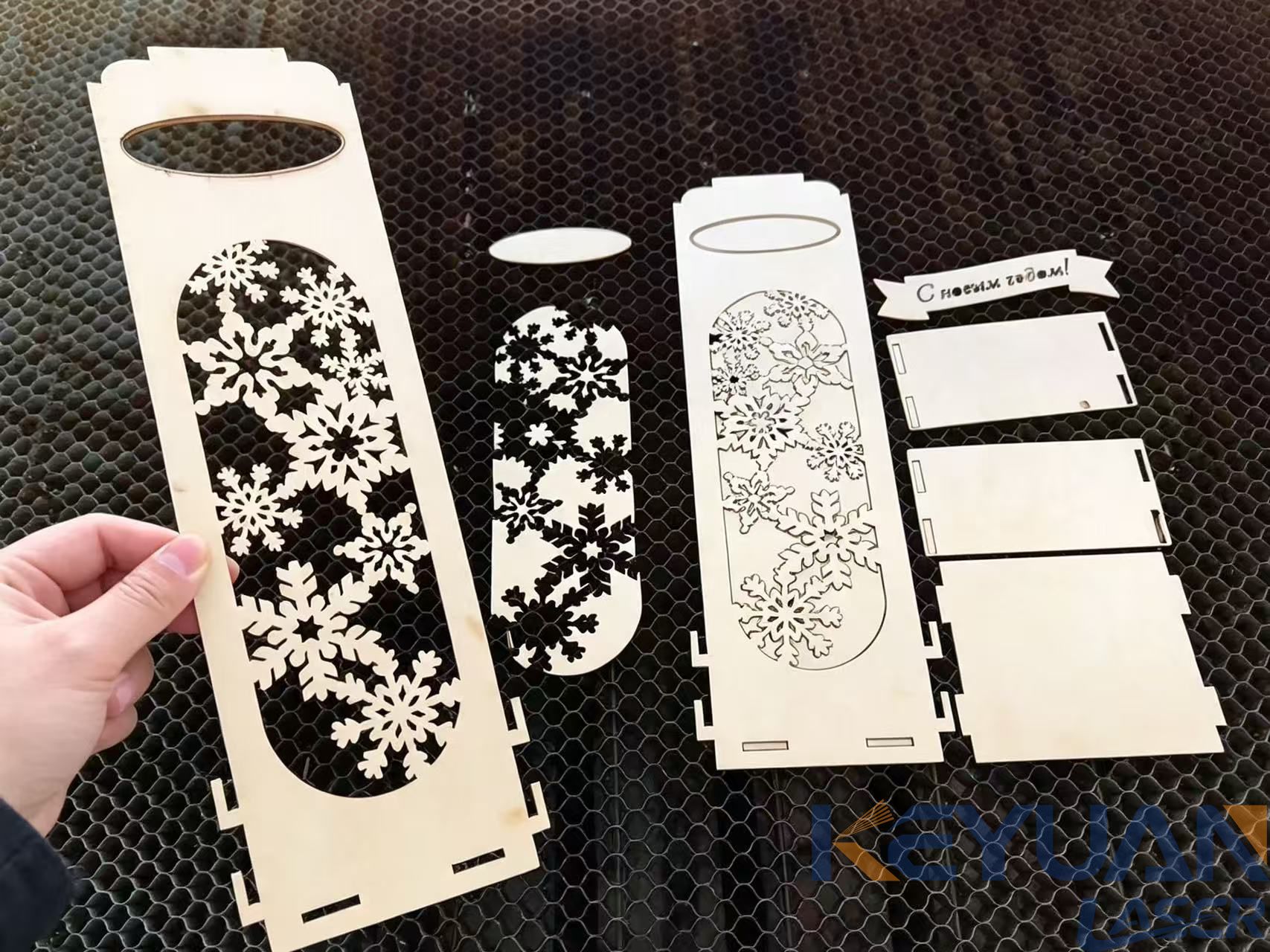
| Cast acrylic | Excellent, frosted contrast | Glossy polished edge | Sheet is too flexible and splinters |
| PVC / foam board | Excellent, sharp contrast | Edges melt and wrinkle | Use rigid PVC, not foam |
| MDF and plywood | Good, slightly sooty | Black burnt edge | Dust is the fire risk, not the cut |
| Leather | Excellent, dark on light | Not worth doing | Thickness varies across a hide |
| Glass | Good surface mark, no depth | Clean cut, no polish | Cracks if the sheet is held down |
| Aluminium composite panel | Surfaces, core shows | Do not cut | Core is plastic and will melt |
Read the last column before you read the engraving column. On signage work the material decides your process, not the other way round.
Power Is Not the Same as Depth
Buyers argue about watts and almost never need to. What they actually need is to know how deep a mark looks, because a logo that reads from two metres is a shallow engraving, and a logo you can feel with a thumb is a different job.
| Job | Typical power | Travel speed | The usual problem |
|---|---|---|---|
| Shallow logo, 0.1-0.3 mm deep | 60-100 W | Slow | Surface chars if you hurry |
| Deep recess, 1-2 mm | 100-150 W | Slow | Carbon builds up in the pocket |
| Cut 3-5 mm acrylic | 100-150 W | Medium | One pass usually leaves a thin skin |
| Cut 8-10 mm MDF | 150 W | Slow | Not cutting through is normal here |
| Metal plate | Not applicable | - | A CO2 laser cannot do it |
The published speed on these machines is up to 60000 mm/min for engraving and 40000 mm/min for cutting. Those are headroom numbers on thin, single-pass work. Nobody cuts 8 mm MDF at 40 metres a minute and gets a usable edge.
The practical figure to remember is smaller. A co2 laser cutter with a 60 to 180 W source handles the work above, and repeat positioning of 0.01 mm means a logo cut in ten places lands in ten places. The minimum English character is 1.0 by 1.0 mm, which is a hard floor below which letters fill in.
The Workflow That Avoids a Remake
The three shops that get consistent results do the same four things, and none of them are about the machine.
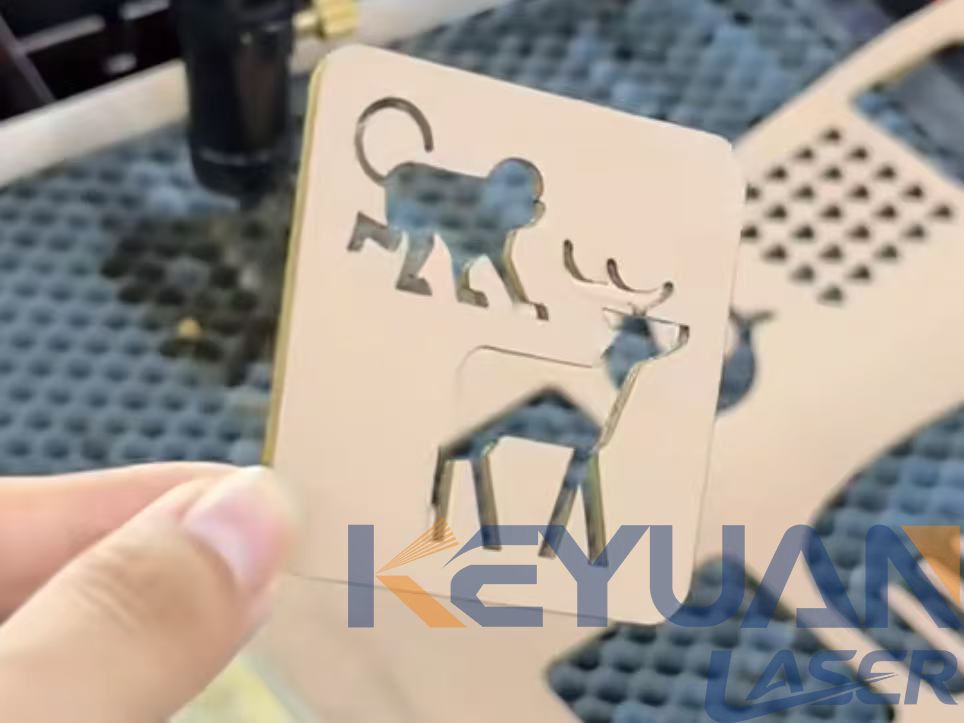
Cut acrylic in two stages. Score most of the way through, then a slower second pass. A full-depth single pass on cast acrylic throws a cloud of vapour that clouds the lens and dulls the very edge you are selling.
Test your air assist every morning. Cutting quality on acrylic depends on air blowing the melt out of the kerf — the narrow channel the beam travels in. A blocked air line produces the cloudy edges your customer complained about, and it looks exactly like a power problem.
Keep the focus lens clean. Ten minutes at the start of a shift prevents most of the burn marks that get blamed on the material.
Run a test grid on every new material, not every new batch. Acrylic from two suppliers with the same nominal thickness can cut differently.
Where a Small CO2 Machine Is the Wrong Buy
Four situations where you should spend more, or buy something else.
If your largest part regularly exceeds 900 by 600 mm, the small format co2 laser cutter will become the bottleneck, because parts end up on a neighbour's machine. The 9060 and 1390 models exist for exactly this reason, and the jump in price is smaller than the jump in throughput.
If most of your work is thick plywood or MDF panels, a large-format machine with more power and a ball screw drive will do in one pass what the small machine does in three.
If metal is more than a tenth of your revenue, add a fiber marking machine or a small press brake and keep the CO2 for graphics.
And if you are quoting volume signage, a fixed-head or gantry machine beats a bed machine for the same reason a CNC router does: nobody bills for setup time.
FAQ
What power do I need for acrylic signs?
80 to 150 W covers almost all sign-shop work on cast acrylic and PVC. Below 60 W you will be slow on anything thicker than 3 mm, and above 180 W on a small bed you gain speed you cannot use because the bed is the limit.
Can a CO2 laser cut stainless steel or brass?
No. A CO2 source at 10.6 microns is absorbed by acrylic and wood and simply reflected by metals. Metal signage needs a fiber laser or a mechanical process.
Do I need an air compressor?
Yes, and most people underestimate it. A small bed needs roughly 70 to 100 litres per minute of dry, filtered air at about 0.5 to 0.8 MPa. Sizing the compressor for the largest nozzle rather than the average is the difference between clean edges and constant re-cutting.
Why do my cut edges look cloudy?
Almost always air assist. The air has to clear the molten material out of the kerf, and when it does not, it stays on the edge. Check for a blocked or undersized air line before you blame the laser tube.
The Short Version
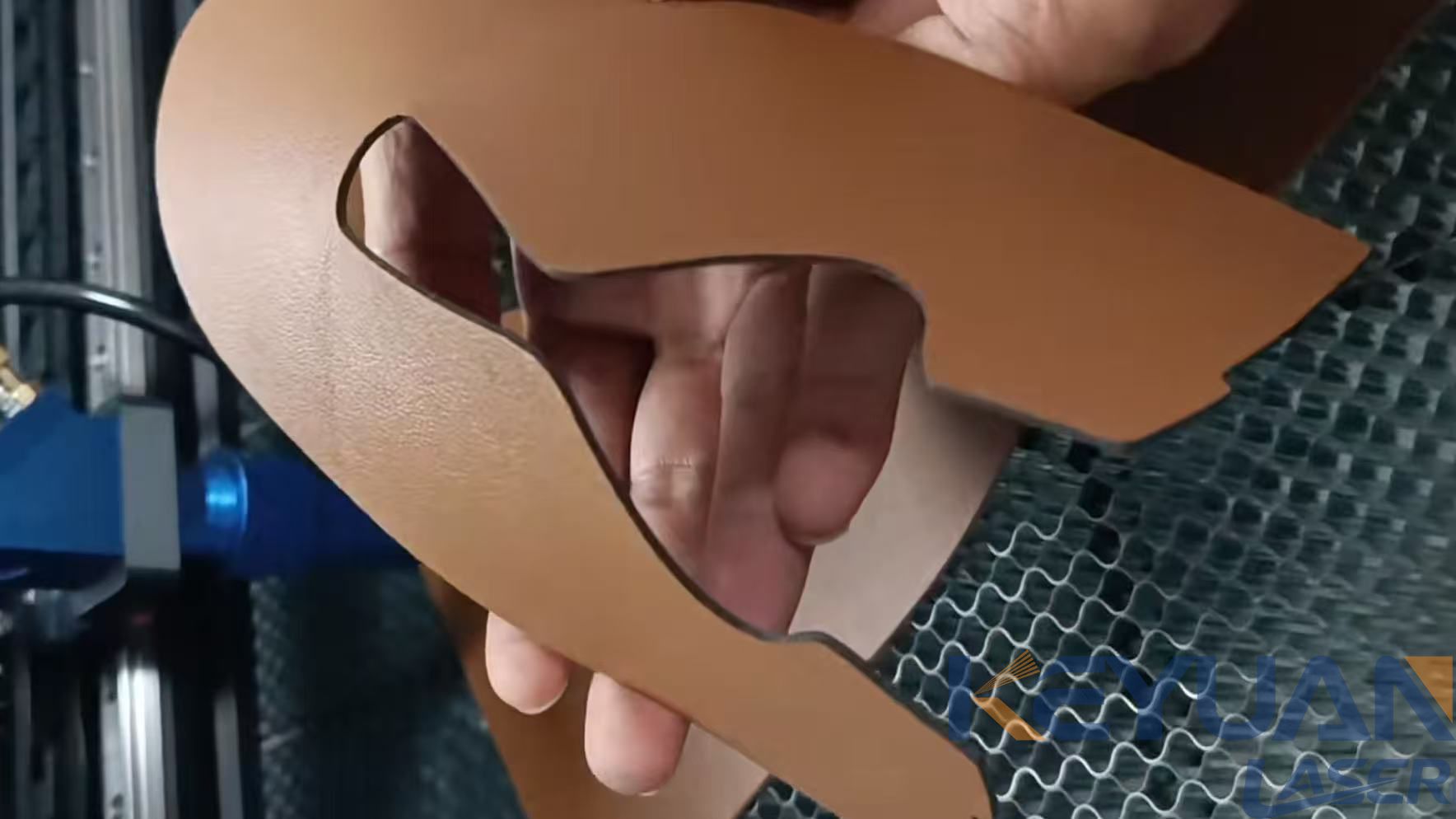
A co2 laser cutting machine earns its money on acrylic, PVC, wood and leather, and cannot touch metal — decide that before you buy. Judge it by cut edge quality on cast acrylic, not by engraving speed, because that is what customers see. Buy the bed size that fits your largest typical part plus 100 mm, not the biggest bed you can afford. And budget for a compressor and an extraction system at the same time as the machine, because a laser engraving machine supplier who cannot answer both questions is selling you a box, not a shop.
label:
related news


E-mail address:
Hotline:
Copyright © 2012-2026 Keyuan Laser All rights reserved