English
 Français
 Deutsch
 Русский
 Türkçe
 Español
 لالعربية
 Português
 Italiano
 ไทย

Pulse Laser Cleaning Machine for the Die Casting Industry
release time:
2026-10-16
Why die casting shops use pulsed laser cleaning on dies and castings: carbon residue, graphite and scale without damaging the cavity or the cast part.
A die casting shop notices three things at once. The shot cycle creeps up, the parts come off the machine duller than they used to, and someone has started booking a man for four hours every week to scrub cavities by hand with a brass brush and a burnishing tool.
None of that is wear on the machine. It is residue, and it is the most expensive thing that happens quietly in a foundry.
Why a Die Gets Dirty the Way It Does
Aluminium and zinc alloys are injected into a steel cavity at temperatures well above 600 degrees. Three things stick to that cavity and they behave differently.
Carbon builds where the metal has repeatedly flowed and never fully cleaned out. It starts soft and dark, then bakes into a hard black layer that is part carbon, part burnt polymer, and part metal. Graphite release agent does the opposite: it goes on thin and even, then cooks into a film that is smooth to look at and terrible for release. Oxide scale forms wherever the cavity has been open to air between shots, especially on the sprue side and around the gate.
The reason manual cleaning never fixes it permanently is that each method attacks only one layer. The brass brush removes loose graphite and leaves the carbon behind. Blasting takes off carbon and takes the polish with it. Solvent gets the grease out and leaves everything else where it was.
Where Pulse Matters More Than Anywhere Else
A die cavity is the hardest combination you will clean. The cavity is hardened tool steel, finished to a mirror, and the part coming out of it is often a thin-walled aluminium casting that warps if you clamp it.
That is exactly what a pulsed laser cleaning machine is good at, and it is why foundries use one rather than a steady-beam machine. The beam switches thousands of times a second and is off in between. Heat from each burst spreads into the steel and away before the next burst arrives. The surface gets cleaned without ever reaching a temperature that would pit it or dull the polish.
A continuous beam on the same cavity does the same job faster and takes a thin layer of polish with it. On a cavity that is already at the edge of the cavity-life limit, that difference is the whole argument.
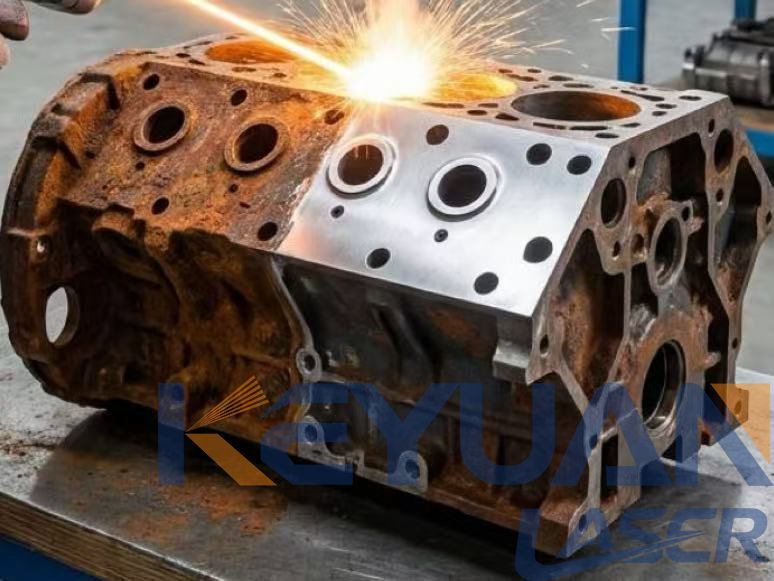
What Actually Comes Off a Die
| What you find on the cavity | What it is | Can pulsed laser take it | Watch for |
|---|---|---|---|
| Hard black carbon | Burnt polymer and burnt metal | Yes, quickly | Deep pitting stays until the cavity is repaired |
| Graphite film | Cooked release agent | Yes | Take it off before it becomes carbon |
| Oxide scale on die steel | Rust and heat scale | Yes, with low power | Test near a corner first |
| Ejector grease and oil | Grease, not residue | No | Degrease chemically first, then laser |
| Chrome plated surface | Hard chrome plate | Last resort | Plating blisters at high temperature |
| Sprue and gate burr residue | Flash and sprue stub | Yes | Change the nozzle afterwards |
Read that table as six different jobs. A shop that buys a machine expecting one use will be disappointed, and a shop that treats it as a multi-job cleaning station gets very good value.
The Part Side, and Pulse or Continuous
Cleaning the die is only half of it. The castings themselves come out with gate residue, flash and an oxide skin that a shot blast would happily remove but would also round off and work-harden.
Thin-walled aluminium castings are where this matters most. An impact blast peens the surface and can change the dimensions a die was cut to. A pulsed laser removes the gate stub and the runner residue without touching the sealing faces, so the casting comes off the machine close to as-cast.
This is also where the choice of source power stops being interesting. Die cavities and aluminium castings do not need 3000 W. They need control. A pulse laser cleaning machine in the 200 to 500 W range with an adjustable pulse frequency covers cavities, gates and part dressing in one station, and the F254 or F330 heads cover either a small cavity or a larger flat bed depending on what you point it at.
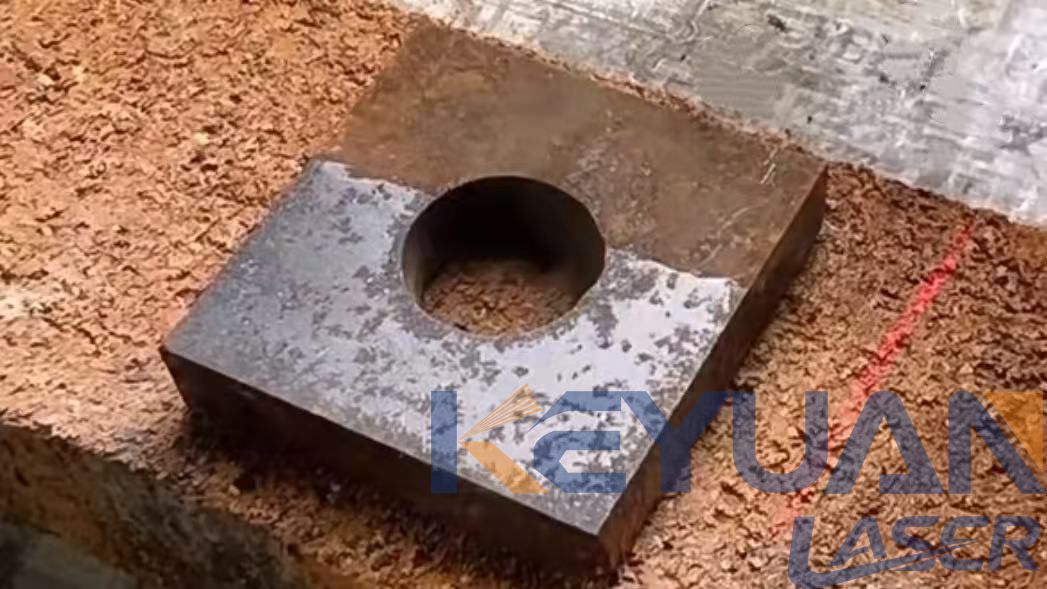
| What you are cleaning | Choose pulse | Choose continuous | Why |
|---|---|---|---|
| Die cavity, polished to mirror | Pulse | - | Polishing loss is not recoverable |
| Cavity near end of life | Pulse | - | One pitted area ends the cavity early |
| Aluminium casting with thin walls | Pulse | - | No peening, no dimensional change |
| Sprue, runner and gate residue | Either | Either | It is dirt, not a finish |
| Heavy scale on thick steel dies | - | Continuous | Speed matters more than the finish |
The rule is simple. If the surface is a finish, use pulse. If the surface is dirt on something you do not care about, speed is fine.
What It Is the Wrong Tool For
Four jobs are not cleaning jobs. Cracks and deep pits need a repair technician, not a laser. Heavy grease needs degreasing first, because the beam will simply turn it into smoke and spread it. Very large die surfaces, where an operator would be walking the head across a two-metre bed for hours, want a fixed gantry head instead. And a shop that has never measured what the manual cleaning actually costs will underestimate this machine by a wide margin. Count the man-hours before you count the parts.
For broader shop-floor work beyond moulds, an industrial laser cleaning machine line is worth looking at.
FAQ
Can laser cleaning damage a die cavity?
A pulsed laser will not damage a sound cavity at working settings. What it cannot do is restore a cavity that is already pitted, and using too much power on a cavity with existing surface damage will spread that damage.
How often should a die casting mould be laser cleaned?
Between cavity pulls, or on a schedule tied to shot count rather than calendar. Most shops find that cleaning at the changeover removes the need for a mid-run intervention.
Do the castings come out with a different finish?
They come out cleaner and closer to as-cast. A laser does not peen or work-harden the surface the way impact media does, so the dimensional result stays predictable.
What about chrome plated dies?
Treat them as a last resort. Hard chrome is thin and it blisters at the temperatures that remove carbon. Use low power, short passes, and test on a non-critical area first.
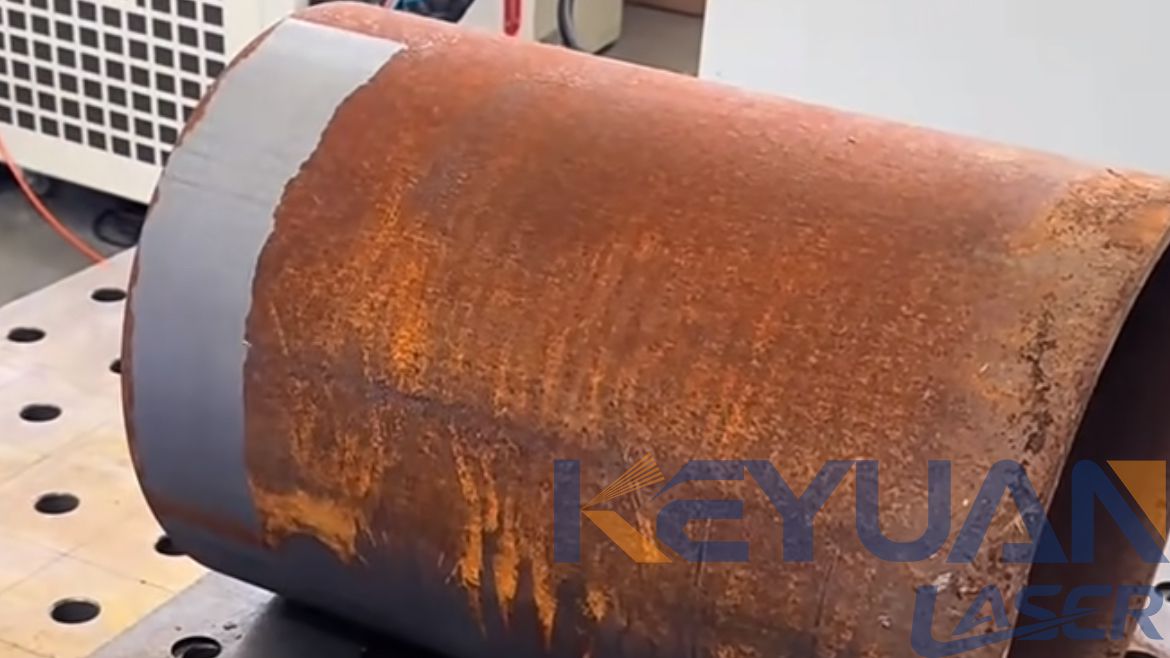
The Short Version
A pulsed machine solves a residue problem that manual cleaning only postpones. Keep the cavity a pulsed laser cleaning machine job because the polish is a finish, keep the sprue and gate work on whichever mode is faster, and never point it at grease. Buy on the head, not the wattage: a small scan head that reaches into a cavity is worth more than a large one that cannot. And if the same shop also cleans heavy rust and thick scale, continuous laser cleaning covers that side of the work at a lower cost per hour.
label:
related news


E-mail address:
Hotline:
Copyright © 2012-2026 Keyuan Laser All rights reserved