English
 Français
 Deutsch
 Русский
 Türkçe
 Español
 لالعربية
 Português
 Italiano
 ไทย
Laser Cleaning Machine for Automotive Parts: Before and After
release time:
2026-10-20
Where a laser cleaner pays off in an auto parts shop: incoming oxidation, rework, surfaces you must not touch, and where blasting still wins.
The most useful thing a laser cleaning machine for automotive parts supplier does is not cleaning. It is making a surface *visible* — removing a thin blanket of oxide so a leak check, a magnetic particle test or a coating inspection can actually see the metal underneath.
That reframing matters because a parts supplier is not cleaning for appearance. Nobody looks at a suspension bracket. They are cleaning so a downstream process can pass or fail correctly, and a surface that looks clean but still carries an oxide skin will fail anyway.
The Four Jobs That Come Through the Door
Automotive supply shops tend to ask for four things, and they are not equally well served by laser.
| Job | What it really is | Laser fit | Why |
|---|---|---|---|
| Incoming oxide on steel blanks and forgings | Mill scale and storage rust on incoming stock | Good | Thin even layer, no paint to strip |
| Rejected parts before rework | Oil, cutting fluid, light rust, marking ink | Very good | Handheld work, one part at a time, no masking |
| Weld prep before robotic or manual welding | Mill scale, oil, and a light heat tint | Excellent | This is the classic laser use — nothing else does it as fast |
| Paint or heavy coating removal | Multi-layer paint, epoxy primer, PVC plastisol | Poor | Laser heats the coating instead of lifting it; abrasives are faster |
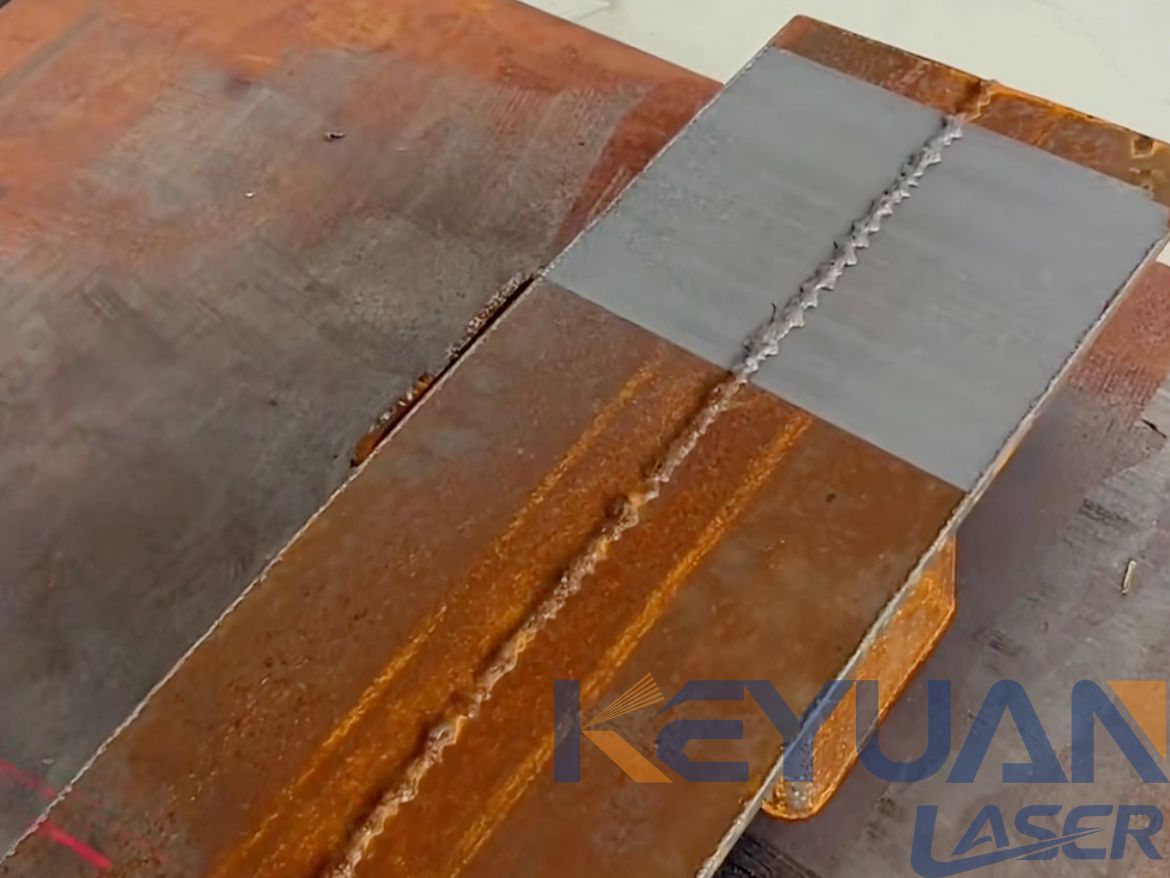
The row that surprises people is the second one. A rejected part going back through the line is usually covered in one or two things — oil, swarf, a supplier mark, maybe a light surface rust — and a handheld laser removes them without taking any base metal with them.
The row that disappoints is the fourth. Laser cleaning is a thin-layer technology. It is superb at removing a few tens of microns and very bad at removing a thick film. Paint is thick.
Set against the alternatives, the split falls on one line — how thick is the layer you are removing?
| Condition | Best route | Why the other one loses |
|---|---|---|
| Mill scale or storage rust on a blank | Laser | Abrasives cut into the steel and change the surface the coating sees |
| Oil and cutting fluid, no rust | Laser | Blasting will not remove oil at all |
| Weld prep before robotic welding | Laser | No burr or inclusion risk the way a ground surface has |
| Multi-layer paint or epoxy primer | Abrasive | Laser heats the film instead of lifting it |
| PVC plastisol or thick underbody coating | Abrasive | Same reason, and thicker |
| A sealing face you must not touch at all | Neither | Mask it and use the process the drawing specifies |
That last row is not a preference. Sealing faces are machined to tolerance in microns, and every cleaning process that removes a coating is also removing metal at the boundary.
What Matters About Base Metal
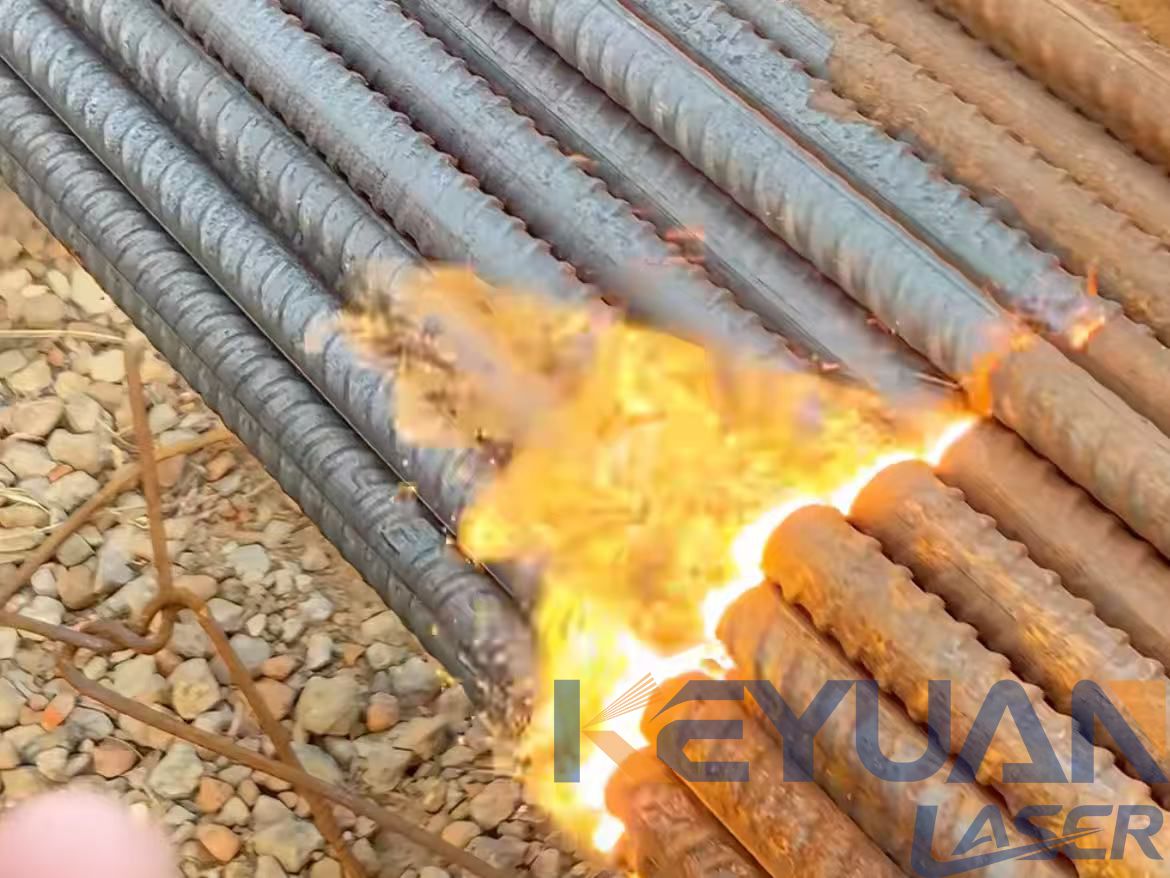
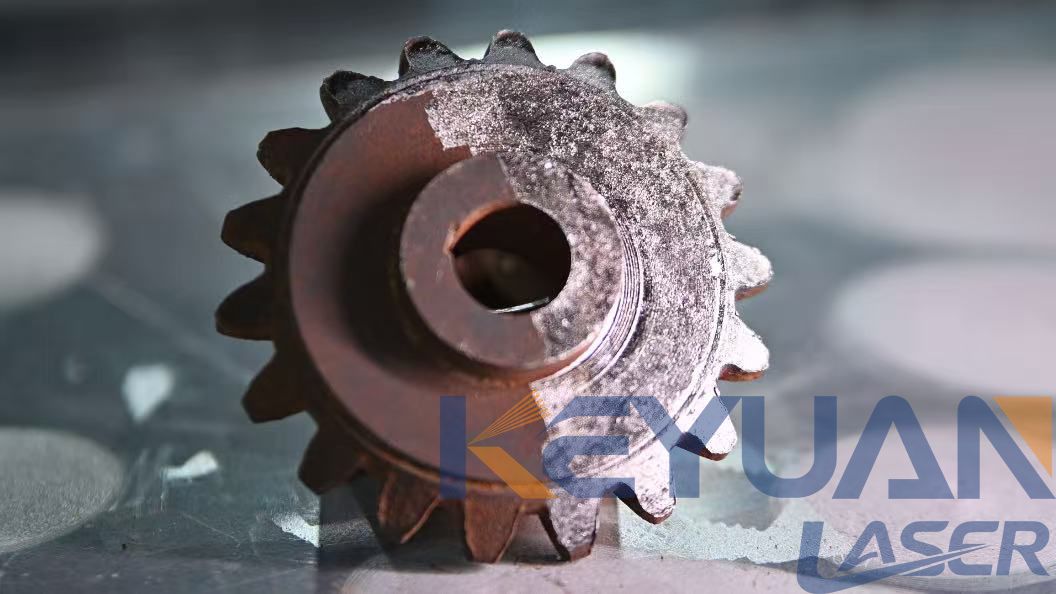
Laser cleaning works on steel and stainless not because of heat but because the oxide layer absorbs far more than the metal underneath. The light removes the oxide and largely bounces off the clean steel, which is why you can clean a part with no measurable dimensional change.
A pulse laser cleaning machine is the other option shops ask about, and it earns its place on the same part. Where it gets conditional is the transition zone: on a heavily corroded part there is always a boundary where the surface is partly clean and partly still oxidised. Work that boundary too hard and you start pulling scale off in sheets, which leaves a pitted surface a coating will not adhere to.
Shop talk aside, the handheld laser cleaner category exists for exactly this: a shop that is inspecting parts rather than stripping them.
The practical rule is: use enough passes to take the oxide, not enough to take the steel. Two light passes beat one heavy pass almost every time. You can see this in the sample pattern — a clean area, a slightly darker heat-affected area, then untouched material. The middle band is where defects appear.
Aluminium is a different animal. Its oxide reforms almost instantly, so a cleaned aluminium part looks barely different from a dirty one until you put a coating on it. The test is not visual — put it through the coating line.
Where the Laser Must Not Go
This is the paragraph we give every automotive customer before the first purchase, and it is the one that prevents a return.
Any surface that is a sealing face or a bearing seat is off limits unless the oxide layer is genuinely interfering and you have measured it. Those surfaces are machined to tight tolerance, often in the single-digit micron range. A cleaning process that removes oxide can also remove a few microns of metal if you push it, and a bearing seat is one of the few places where that matters.
The other two warnings are about the room rather than the part.
Stainless steel and aluminium reflect the beam. A bright machined surface can send it back at an angle toward whoever is holding the gun. This is why the same class of equipment needs proper eyewear and a marked working area even in a workshop that looks perfectly open.
And coatings containing chromate, zinc chromate, or lead-based primer are toxic when heated. Several of those are still found on older parts and on imported salvage. If you do not know what is on the part, do not laser it before a material check.
Buying for the Work, Not the Wattage
Published power on these machines runs 1200 W to 3000 W. For an automotive shop the decision is not usually peak power — it is whether you will run one gun or two, and whether the parts are bigger than your table.
A 300 mm scan width is standard, and that single number decides how fast you finish a floor pan or a bumper bracket. It is the scan width, not the wattage, that sets the pace on wide flat parts.
Cooling is water-cooled on all of them, so plan where the chiller and manifold go. That is a bigger decision than the machine: a 3000 W unit wants three-phase power, and the electrical work often takes longer than the lead time.
Two accessories pay for themselves quickly. A fume arm is not optional above 1000 W, because the plume follows the beam path and not your hand. A set of scanner lenses is cheaper than the two days you lose when a 3000 W unit runs a setting meant for 1500 W. The continuous cleaning range covers the fixed-head side of the same decision.
FAQ
Will laser cleaning damage a bearing seat or a sealing face?
It can, if you push the beam into the transition zone. Those surfaces are machined to tight tolerance, so keep the process to thin oxide removal, use multiple light passes, and never treat a seal face you have not measured.
Can it remove paint?
Not reliably. Laser cleaning works on thin oxide layers; thick paint and epoxy primers need heat to lift, and you will heat the metal underneath. Use abrasives for paint and keep the laser for scale, oil, and light surface rust.
Is it safe to clean stainless and aluminium surfaces with a handheld unit?
Not without proper controls. Both are reflective and can send the beam off at an angle. You need eyewear, a marked working area, and ideally fume extraction regardless of how open the shop looks.
How fast is it on typical automotive parts?
A single flat steel part with light oxide usually needs one to three passes. The larger constraint is scan width — a 300 mm head covers a floor pan or bracket in a fraction of the time it takes to walk a grinder around the same area.
The Short Version
Buy a laser cleaner to remove the oxide skin that hides a surface you need to inspect, not to strip paint. Two light passes beat one heavy pass every time, keep it away from sealing faces, and plan the fume arm before the machine arrives.
label:
related news


E-mail address:
Hotline:
Copyright © 2012-2026 Keyuan Laser All rights reserved