English
 Français
 Deutsch
 Русский
 Türkçe
 Español
 لالعربية
 Português
 Italiano
 ไทย

Handheld Fiber Laser Cleaning Machine: 6 Things to Check
release time:
2026-10-14
What to check on a handheld fiber laser cleaning machine before you pay, from gun weight and scan width to extraction, and the jobs it still cannot do.
A customer sent us a quote he had been given elsewhere last spring. Two thousand watts, "cleans a square metre an hour", four weeks delivery. Then he sent a photo of the part: a 1.2 mm pressed steel cover with light surface rust, forty pieces a day.
That machine would have done the job badly. He would have paid for power he could not use and risked warping every third panel. Six things decide whether a handheld cleaner earns its money, and none of them is the number on the front of the brochure.
What a Handheld Cleaner Actually Does
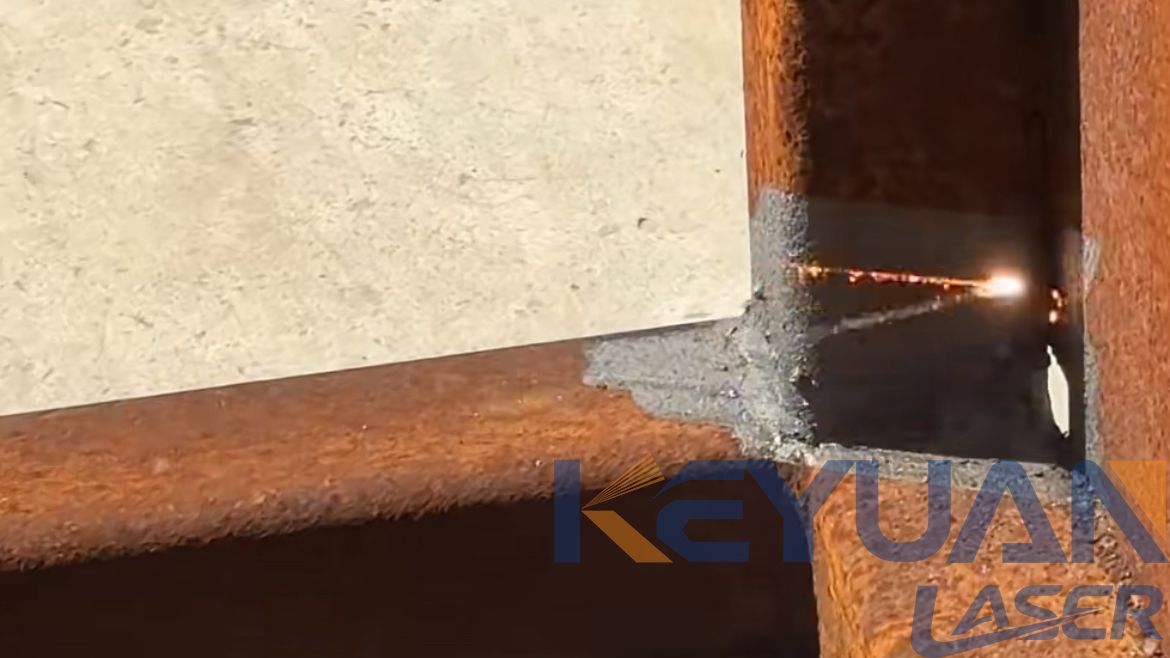
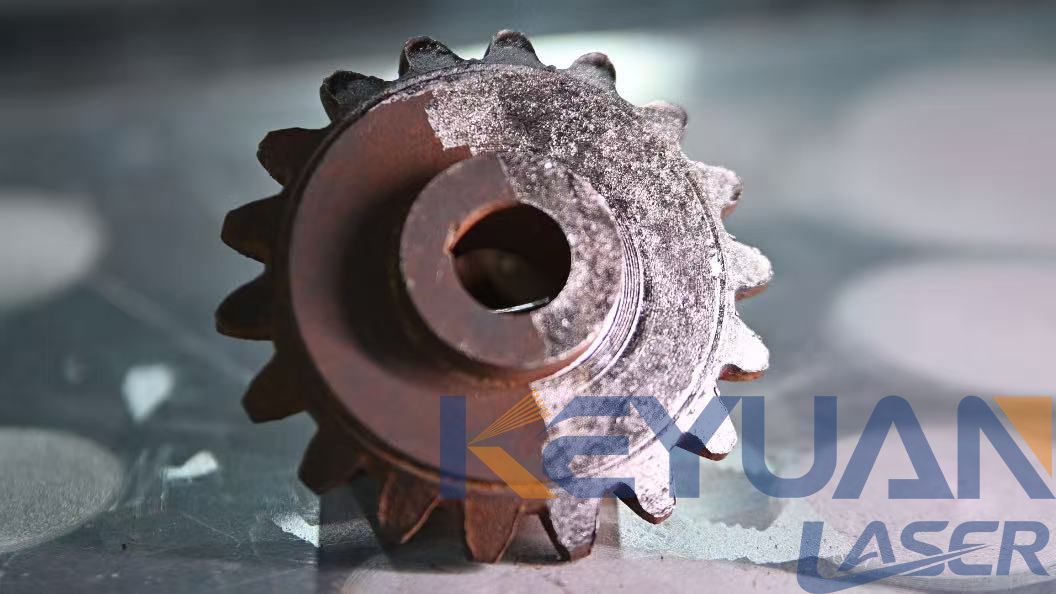
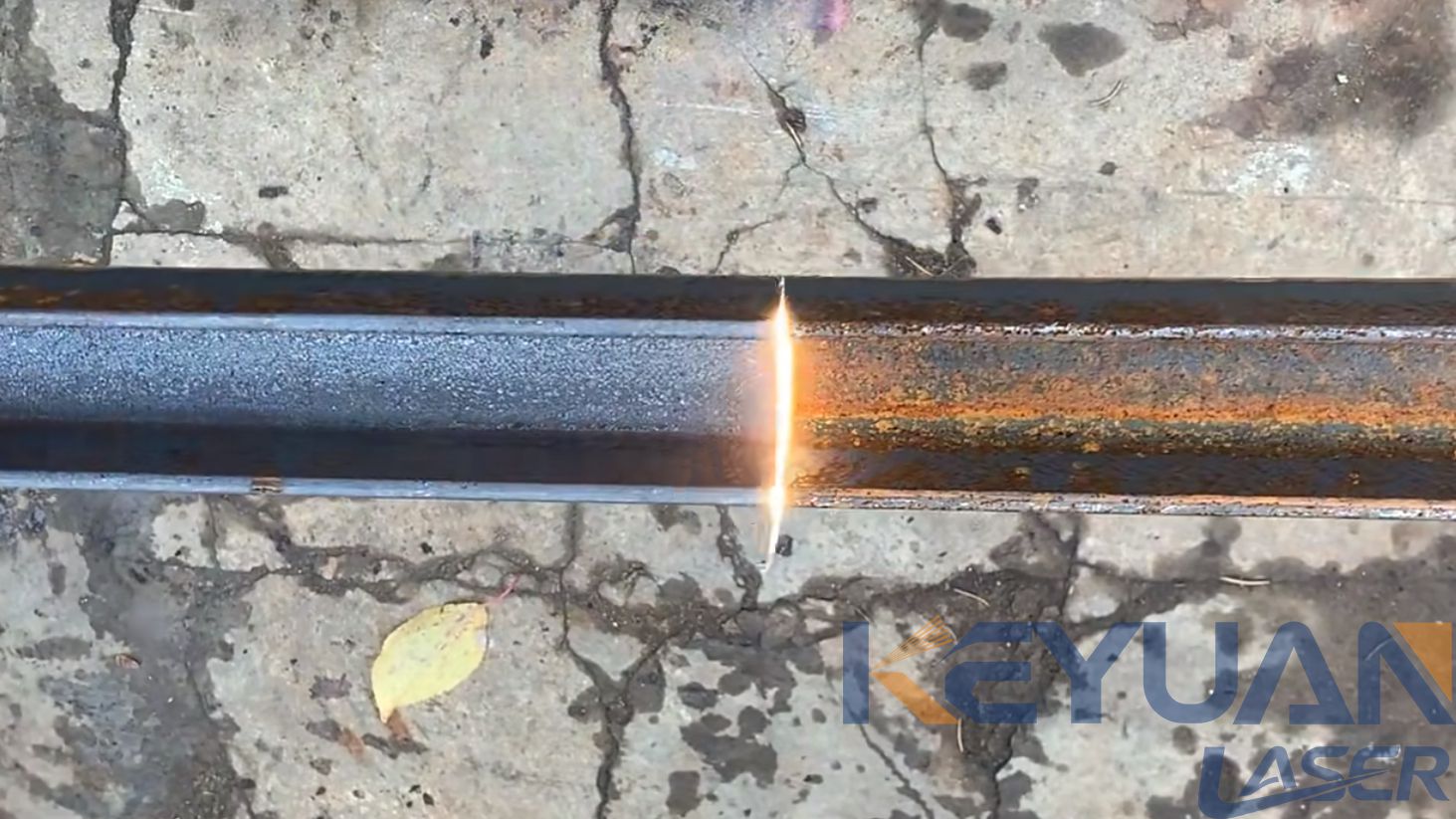
A handheld fiber laser cleaning machine does not grind, and it does not scrape. It fires short pulses of light at the surface, the top layer absorbs the energy and lifts off as dust and vapour. Rust, mill scale, paint, oil and oxide come away; the steel underneath usually stays where it was.
That is why the finish looks different from blasting. There is no abrasive left in the pits, no media to sweep up, and no gouges to fill before paint. What you do get is a puff of smoke at the cleaning head, which is the part buyers forget to budget for.
It is also not magic. The beam removes a layer, so a deep rust pit stays a pit — it is simply clean. And every pulse puts heat into the panel, which matters a great deal on thin sheet.
Six Checks Before You Pay
| What to check | Why it decides your day | How to test it |
|---|---|---|
| Gun weight and balance | You hold it for a shift, not for a demo. Weight sets how many hours you can actually work. | Ask to hold the gun with your arm out for ten minutes. Past about 1.5 kg it gets heavy by mid-afternoon. |
| Scan width | The raster line sets how much surface one pass covers. A narrow line means more passes over the same panel. | Ask for scan width in millimetres, not just spot size, and ask at which working distance. |
| Power | Sets how fast rust lifts and how thick a layer clears in one pass. It does not set quality. | Watch it clean your own part, not a supplier sample that was prepared for the demo. |
| Cable and hose length | Decides where the machine can reach: into a tank, up a gantry, across to a second bench. | Measure your largest part and add walking room. Typical units ship with five to ten metres. |
| Cooling | Air-cooled units move easily and need no chiller. Water-cooled units hold power on long shifts. | Ask for the duty cycle at 35 C ambient, not the number measured in an air-conditioned room. |
| What comes in the box | Extraction, spare lenses, a focus gauge and training are the difference between a tool and a project. | Get the packing list written into the order, not promised in the meeting. |
Those six rows are also the order we would rank them. Weight first, because a laser cleaning machine that tires the operator gets left in the corner. Shops buying for a bay rather than a bench tend to care about a different list, which is why we quote handheld cleaning units differently from bench models.
The Numbers That Decide Your Output
Cleaning rate is scan width multiplied by travel speed, and that product is smaller than most buyers expect.
Handheld work usually moves at one to three metres a minute with a thirty to fifty millimetre scan line. Run flat out, that is a couple of square metres an hour; add repositioning, inspection and a coffee, and one square metre an hour is a fair planning figure. So a two square metre gate frame cleans in an afternoon. A ship hull does not get done this way, at any wattage.
Power changes the number of passes more than it changes the speed. Light surface rust lifts in a single pass at moderate power. A three tenths of a millimetre oxide layer often takes three passes with a slower hand, which is where the hourly figure quietly halves. On painted parts the choice between continuous and pulsed laser cleaning matters more than the watts, because the pulse setting is what decides how much of the energy goes into lifting the coating instead of heating the panel.
Lenses are the only real consumable. Budget one or two a year at a few tens of dollars each, and keep the protective window clean — a dusty window is the usual reason a machine that used to clean well starts leaving shadow stripes.
Why Gun Weight Beats Wattage
We usually steer first-time buyers toward a lighter, lower-power unit rather than the biggest gun in the catalogue, and the reason is arithmetic about people rather than about lasers.
A handheld cleaner is a tool you point at a wall. If the gun weighs three kilograms and the shift runs eight hours, the operator manages two or three hours of real cleaning time. Cut the weight and you buy back working hours, which shows up in output long before another thousand watts does.
The same logic applies to the cable. A five metre hose that reaches the work beats a ten metre hose that drags across the floor behind you. In our experience the shops that get the most out of a handheld unit are the ones that bought a light gun, a long enough hose, and a second gun so two people can work the same cabinet.
What a Handheld Cleaner Is Bad At
| Job on your floor | What a handheld unit does | Better route |
|---|---|---|
| Large flat plates, tens of square metres | Slow, and the overlap shows as stripes | Automated cleaning head on a gantry, or blasting |
| Sheet under about 1 mm | Heat warps the panel where the beam lingers | Lower power, faster passes, or chemical stripping |
| Heavy grease and cutting oil | The beam smokes it and smears it around | Degrease first, then clean the surface |
| Deep pitting and thick scale | Many passes, and you spend time chasing the pit | Grinding or blasting for the pits, laser for the finish |
| Thousands of identical small parts | Operator time dominates the cost of every piece | Fixture with an automated or fixed head |
The honest summary is that a handheld cleaner is a repair and preparation tool. It is excellent on welds to be painted, on site work, on tanks and on frames. It is the wrong tool for a volume stripping job where a machine could move the head instead of a person, and for those jobs an industrial rust and paint removal line with a fixed head is the cheaper answer over a year.
FAQ
Can one machine handle rust, paint and oil?
Yes, with different settings for each. Rust usually comes off in one pass. Paint needs more energy because pigments reflect part of the beam, and white paint is the worst of them. Oil and grease should be wiped off first, because the beam turns them into smoke rather than removing them.
Will a handheld cleaner damage the metal underneath?
It can, and thin sheet is where it happens. Every pulse adds heat, so holding the gun still on a 1 mm panel will distort it. Set the power to the thinnest material you clean that week and test on scrap before you touch a finished part.
Do I need fume extraction with a handheld unit?
For rust and mill scale you can get away with a mask in a ventilated bay. For paint, coatings and galvanised steel, extraction is not optional — those fumes are the reason some coatings need a filter rather than a fan. Buy the extraction with the machine.
Can it clean aluminium and stainless steel?
Yes, but both reflect more of the beam than carbon steel does, so expect lower power and more passes. On polished stainless the reflection is strong enough that a cleaner can throw light back past the head, which is another reason to keep the area behind the operator clear.
The Short Version
Pick the machine around the part you clean every day rather than the thickest part you have ever been asked about. Insist on holding the gun before you pay, measure your largest part against the cable, and ask for the duty cycle at workshop temperature instead of showroom temperature. If you are cleaning large flat areas or thousands of identical pieces, a handheld unit is the wrong purchase and no amount of extra power fixes it.
label:
related news


E-mail address:
Hotline:
Copyright © 2012-2026 Keyuan Laser All rights reserved