Laser Cleaning Machine Safety: Fumes, Eyes and Setup


release time:

2026-10-13

The hazards a laser cleaning machine puts in your workshop, and the extraction, eyewear, area control and paperwork your shop needs before you switch it on.

Ask a supplier what a laser cleaning machine needs and you will hear about power and spot size. Ask an insurance inspector the same question and you will hear about extraction, eyewear and a marked-out area. Both are right, but only one of them can shut your workshop down.

This is the list that second person cares about, written for the size of shop that actually buys one of these machines.

What the Beam Actually Does to You

A cleaning laser is a Class 4 laser. That classification is not a marketing label, it is a legal one, and it means the beam can burn skin and destroy sight faster than you can blink.

The damage is instant and permanent, and it does not need a direct hit. Stainless steel and aluminium throw the beam back at odd angles, so a machine aimed at a flat panel is a risk to anyone standing behind it, not just the person in front. That reflected path is the hazard people forget, because the bright spot on the part draws the eye and the reflection does not.

The Three Hazards in Plain Terms

HazardWhat creates itWhat controls it
Direct and reflected beamClass 4 source, shiny metal surfacesInterlocked bay or enclosure, wavelength-rated eyewear
Fume and dustRust, paint, oil and coatings burning offLocal extraction at the nozzle
NoisePulse energy cracking the surfaceEar protection and distance

Three hazards, three separate fixes. A pair of safety glasses does nothing for the dust, and extraction does nothing for the beam. Shops that get into trouble usually bought one control and assumed it covered the other two.
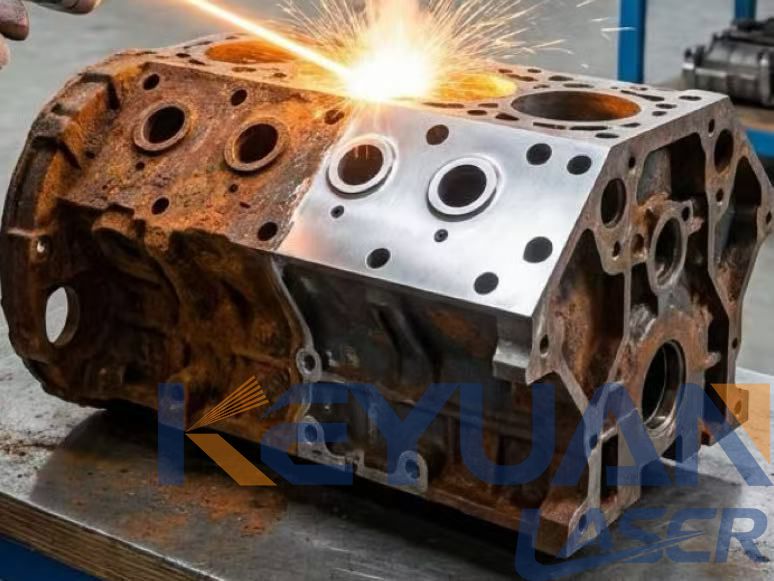
Laser Cleaning Machine Safety: Fumes, Eyes and Setup(Image1)

Fume Is the Part Everyone Underestimates

Rust dust sounds harmless. It is a fine metal oxide that used to be part of a surface, and it goes straight into whatever air the operator breathes.

Now add what is often on top of the rust. Paint, powder coat, oil, cutting fluid and zinc plating all burn off under the beam, and some of those fumes are genuinely nasty at low concentrations. Stripping paint that may contain lead is a job we tell people not to do with a laser cleaner at all, because the beam turns a solid coating into an airborne one and your operator is standing right at the source.

The fix is simple. A local extraction hood at the cleaning head, sized so the plume is caught before it leaves the work zone, and a filter set matched to what you clean. A general workshop fan is not the same thing.

Eyes, Skin and the Area

Eyewear has to match the wavelength, and 1064 nm is the common one on cleaning machines. Ordinary tinted safety glasses and welding shades are not rated for it. You want a stated optical density from the supplier, spares for visitors, and a quick check that the lenses are not cracked before each shift.

The simple answer for the rest is distance and a barrier. A curtained bay with a floor line does two jobs: it keeps the beam in one place, and it makes it obvious to everyone else in the shop where the laser is running. If you cannot afford a booth, the minimum is a screen that blocks the direct and reflected path at eye height, plus a clear rule that nobody crosses the line while the machine is live.

Skin damage is real but easier to control. Long sleeves, no watches or rings near the beam path, and a habit of keeping hands off the spot you are cleaning.
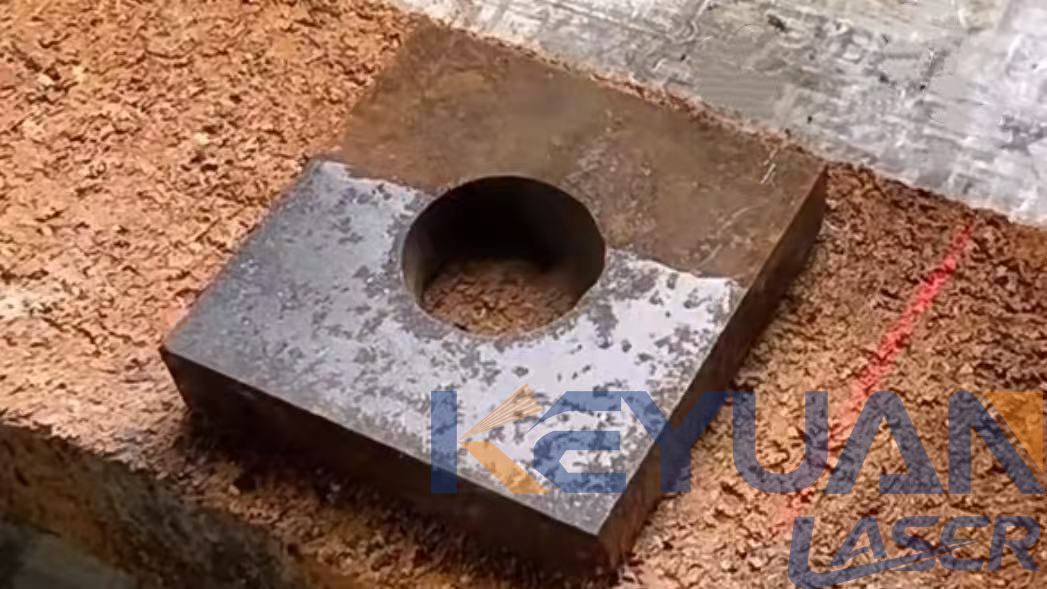
Laser Cleaning Machine Safety: Fumes, Eyes and Setup(Image2)

The List Your Inspector Will Ask About

ItemSmall shopProduction cell
ExtractionPortable fume arm on castorsDucted unit with staged filters
Area controlCurtains and a marked floor lineInterlocked booth with a warning light
EyewearRated glasses, two pairs plus sparesSame, with logged daily checks
PeopleOne trained operator, a written risk noteNamed safety officer and a training log
Power and servicesA dedicated circuitDedicated supply plus chiller space

None of this is expensive relative to the machine. The extraction arm and the curtains on this list cost less than a spare set of optics, and they are the difference between a tool your team uses and a tool your team is nervous about.

One more item belongs on the list and is easy to miss: the paperwork. A short risk assessment, a training record with names and dates, and the machine's own safety documentation filed together. That bundle is what turns an incident into an accident report instead of a shutdown.
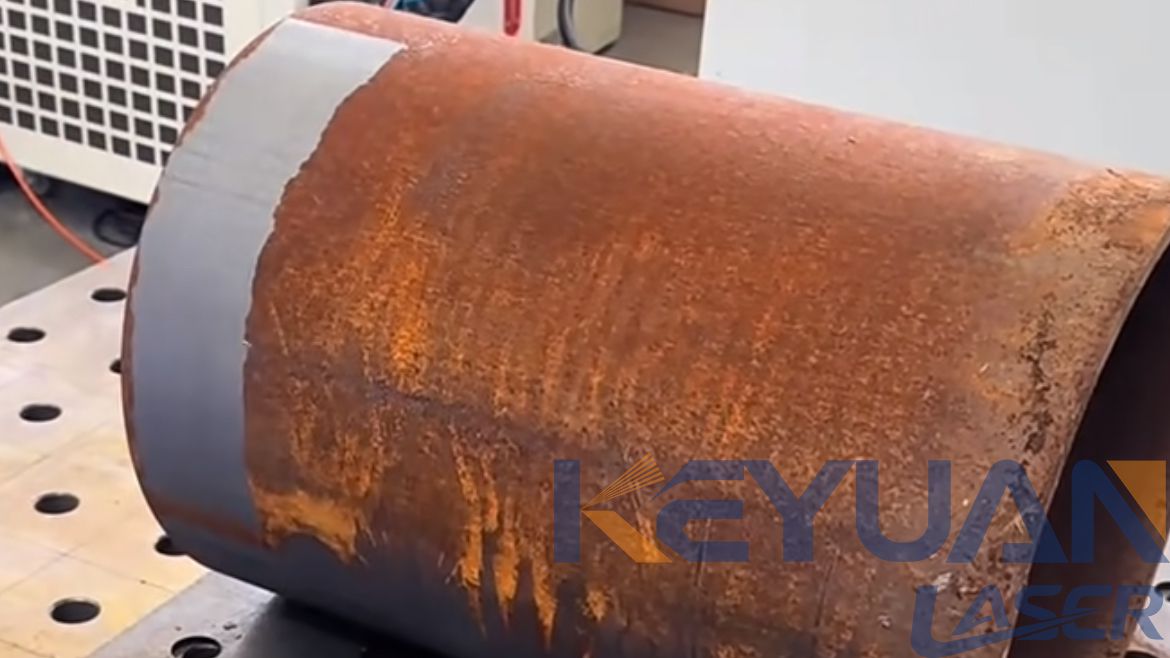
Laser Cleaning Machine Safety: Fumes, Eyes and Setup(Image3)

FAQ

Do I need a full enclosure?
Not always. Many shops run a handheld laser cleaning machine with an extraction arm and a curtained area, which is enough for occasional work. As soon as the machine runs most of the day, or works on coatings, an interlocked booth becomes the cheaper option over the long run.

Are safety glasses enough?
For the beam, yes, if they are rated for the wavelength and you keep them on. They are not enough on their own, because they do nothing about the fume. Treat eyewear and extraction as two separate purchases.

What about cleaning paint and coatings?
Check what is in the coating first. Unknown or older paints can contain lead or other heavy metals, and a laser turns them into breathable dust. Where the coating is unknown, abrasive or chemical stripping with proper containment is often the safer route.

Is a pulsed laser cleaning machine louder than a continuous one?
The pulse itself makes a sharp crack against the surface, and on some materials it is loud enough to need ear protection even for short jobs. Swap to continuous laser cleaning heads and the noise drops, but more of the energy goes into the part as heat, so the two trade one risk for another.

The Short Version

A cleaning laser is safe when the three controls are in place: keep the beam in a bounded area, catch the fume at the source, and protect eyes against both the direct and the reflected path. Buy the extraction with the machine rather than after it, put a line on the floor, train one person properly, and keep the paperwork in one folder. Do that and the machine behaves like any other tool in the shop. Skip it and you have a Class 4 laser running in an open bay, which is what the inspector will write down.

label:


If you want to know more about the details of a certain company, please visit our official website where there is comprehensive and in-depth information for you to check!


Copyright © 2012-2026 Keyuan Laser All rights reserved

Leave your message

If you have any suggestions or questions for us, please feel free to contact us!

We use cookies to improve your online experience. By continuing to browse this website, you agree to our use of cookies.

Cookies

Please read our Terms and Conditions and this Policy before accessing or using our Services. If you cannot agree with this Policy or the Terms and Conditions, please do not access or use our Services. If you are located in a jurisdiction outside the European Economic Area, by using our Services, you accept the Terms and Conditions and accept our privacy practices described in this Policy.
We may modify this Policy at any time, without prior notice, and changes may apply to any Personal Information we already hold about you, as well as any new Personal Information collected after the Policy is modified. If we make changes, we will notify you by revising the date at the top of this Policy. We will provide you with advanced notice if we make any material changes to how we collect, use or disclose your Personal Information that impact your rights under this Policy. If you are located in a jurisdiction other than the European Economic Area, the United Kingdom or Switzerland (collectively “European Countries”), your continued access or use of our Services after receiving the notice of changes, constitutes your acknowledgement that you accept the updated Policy. In addition, we may provide you with real time disclosures or additional information about the Personal Information handling practices of specific parts of our Services. Such notices may supplement this Policy or provide you with additional choices about how we process your Personal Information.


Cookies

Cookies are small text files stored on your device when you access most Websites on the internet or open certain emails. Among other things, Cookies allow a Website to recognize your device and remember if you've been to the Website before. Examples of information collected by Cookies include your browser type and the address of the Website from which you arrived at our Website as well as IP address and clickstream behavior (that is the pages you view and the links you click).We use the term cookie to refer to Cookies and technologies that perform a similar function to Cookies (e.g., tags, pixels, web beacons, etc.). Cookies can be read by the originating Website on each subsequent visit and by any other Website that recognizes the cookie. The Website uses Cookies in order to make the Website easier to use, to support a better user experience, including the provision of information and functionality to you, as well as to provide us with information about how the Website is used so that we can make sure it is as up to date, relevant, and error free as we can. Cookies on the Website We use Cookies to personalize your experience when you visit the Site, uniquely identify your computer for security purposes, and enable us and our third-party service providers to serve ads on our behalf across the internet.

We classify Cookies in the following categories:
 ●  Strictly Necessary Cookies
 ●  Performance Cookies
 ●  Functional Cookies
 ●  Targeting Cookies


Cookie List
A cookie is a small piece of data (text file) that a website – when visited by a user – asks your browser to store on your device in order to remember information about you, such as your language preference or login information. Those cookies are set by us and called first-party cookies. We also use third-party cookies – which are cookies from a domain different than the domain of the website you are visiting – for our advertising and marketing efforts. More specifically, we use cookies and other tracking technologies for the following purposes:

Strictly Necessary Cookies
These cookies are necessary for the website to function and cannot be switched off in our systems. They are usually only set in response to actions made by you which amount to a request for services, such as setting your privacy preferences, logging in or filling in forms. You can set your browser to block or alert you about these cookies, but some parts of the site will not then work. These cookies do not store any personally identifiable information.

Functional Cookies
These cookies enable the website to provide enhanced functionality and personalisation. They may be set by us or by third party providers whose services we have added to our pages. If you do not allow these cookies then some or all of these services may not function properly.

Performance Cookies
These cookies allow us to count visits and traffic sources so we can measure and improve the performance of our site. They help us to know which pages are the most and least popular and see how visitors move around the site. All information these cookies collect is aggregated and therefore anonymous. If you do not allow these cookies we will not know when you have visited our site, and will not be able to monitor its performance.

Targeting Cookies
These cookies may be set through our site by our advertising partners. They may be used by those companies to build a profile of your interests and show you relevant adverts on other sites. They do not store directly personal information, but are based on uniquely identifying your browser and internet device. If you do not allow these cookies, you will experience less targeted advertising.

How To Turn Off Cookies
You can choose to restrict or block Cookies through your browser settings at any time. Please note that certain Cookies may be set as soon as you visit the Website, but you can remove them using your browser settings. However, please be aware that restricting or blocking Cookies set on the Website may impact the functionality or performance of the Website or prevent you from using certain services provided through the Website. It will also affect our ability to update the Website to cater for user preferences and improve performance. Cookies within Mobile Applications

We only use Strictly Necessary Cookies on our mobile applications. These Cookies are critical to the functionality of our applications, so if you block or delete these Cookies you may not be able to use the application. These Cookies are not shared with any other application on your mobile device. We never use the Cookies from the mobile application to store personal information about you.

If you have questions or concerns regarding any information in this Privacy Policy, please contact us by email at . You can also contact us via our customer service at our Site.