English
 Français
 Deutsch
 Русский
 Türkçe
 Español
 لالعربية
 Português
 Italiano
 ไทย

Laser Cleaning Machine Power: How Many Watts Do You Need?
release time:
2026-10-10
Pick laser cleaning machine power from the dirt and the metal, not the brochure. Why 200W handles most rust, and when you really do need 1000W.
Most buyers ask for watts first. Watts are the last thing to decide, not the first. Two shops with the same 300 W laser cleaning machine can get completely different results, because what a machine can clean is set by the dirt and by the metal underneath it.
Get those two right and the power almost picks itself. Get them wrong and no wattage will rescue the job.
Start With the Dirt, Not the Wattage
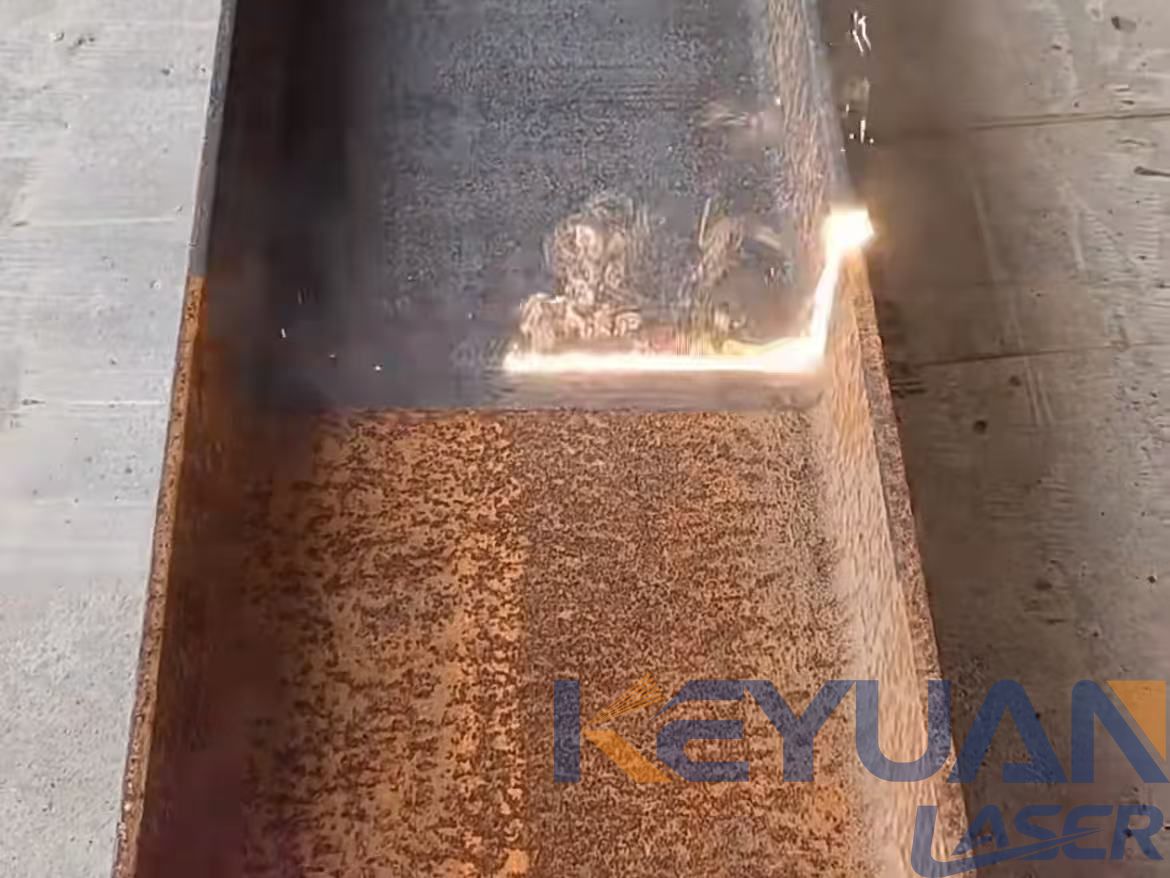
Every cleaning job is really a question about how much energy that layer needs to break free. Oil comes off at almost nothing. Powder coat on a steel frame takes several times more. How thick the layer is matters too, and so does how well it is stuck on.
| What you are removing | Average power that handles it | Passes |
|---|---|---|
| Oil, fingerprints, dust | 100 to 200 W | one |
| Flash rust, heat tint, light oxide | 200 W | one |
| Surface rust, thin paint, weld prep | 200 to 300 W | one |
| Mill scale | 500 W | one, and slow at 300 W |
| Powder coat, thick epoxy, heavy scale | 1000 W and up | one |
| Salt and chloride contamination | none | it needs washing, not a laser |
That last row matters more than every number above it. A laser will happily leave chlorides sitting in a pit, and rust starts again there within weeks. If your parts come off a ship or out of a coastal yard, budget for a wash step as well.
What Each Power Class Really Cleans
100 to 200 W. This is the maintenance class. It lifts oil, fingerprints, flash rust, heat tint and light oxidation off tooling and small parts. If cleaning is an occasional job between other work, start here. A handheld laser cleaning machine in this band is what most shops actually need.
200 to 300 W. The volume seller, and for good reason. It handles surface rust, thin paint and weld prep on steel at a walking pace. If you prep joints before welding all day, price this band first.
500 W. Mill scale in one pass instead of three. It earns its money where large areas need preparing and the pass count is what costs you time.
1000 W and up. Powder coat, thick coatings, large moulds. At this level you are not buying a hand tool any more. You are buying a cart or a gantry, an electrical supply upgrade, and extraction sized to match.
| Class | Site power | Head weight | Who it suits |
|---|---|---|---|
| 100 to 200 W | standard single phase | 4 to 6 kg | Maintenance shops, moulds, small parts |
| 300 W | single phase, generous circuit | 6 to 9 kg | General fabrication, rust and weld prep |
| 500 W | usually three phase | 9 to 12 kg | Heavy prep, larger parts, long shifts |
| 1000 W and up | three phase, dedicated supply | cart or gantry | Production, wide area, powder coat |
Why Peak Power Numbers Mislead
Some brochures quote peak power. Cleaning follows average power, so a head advertised at 300 W peak with 200 W average is a 200 W machine for your purposes. Ask for both figures in writing, and ask which one the coverage claim was measured on.
The same trick appears in duty cycle. A machine rated at 1000 W for ten seconds at a time is not a 1000 W machine across a shift. If you clean for hours rather than seconds, the continuous rating at your own workshop temperature is the number that matters.
Thin Metal and Heat: Where More Power Hurts
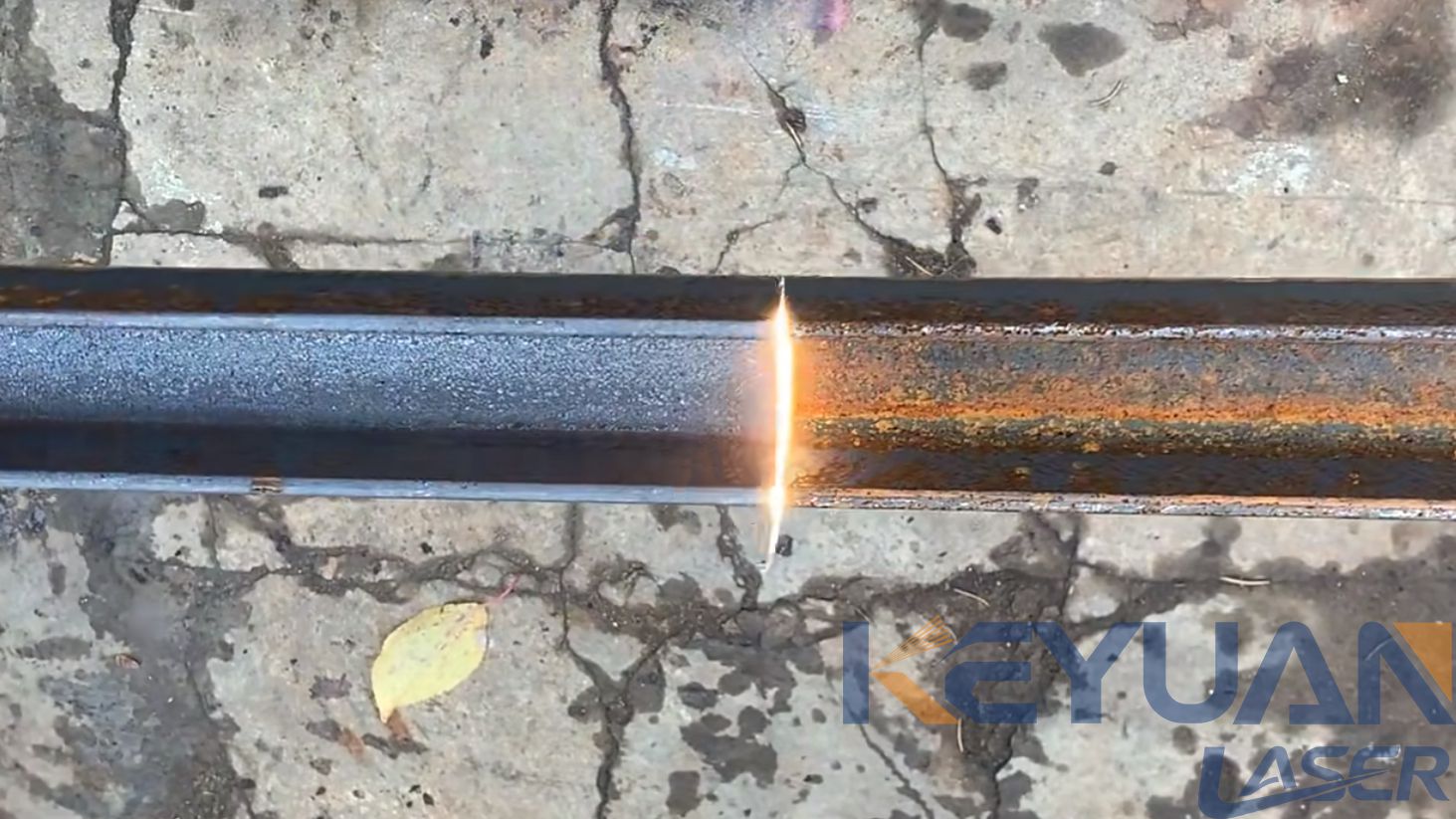
More power is not automatically better, and on thin sheet it is often worse. A cleaning spot pushes a lot of energy into the surface, and on 1 mm stainless or aluminium it will warp the panel long before it damages anything else.
Three things fix it. Keep the head moving, widen the spot so the same energy covers more area, and turn the power down. If your work is mostly thin sheet, a lower power machine with a wider line beam will beat a high power machine on finish, and it will do it without a straightening step afterwards.
The same logic applies to anything with a fine surface, a polished mould or a coated tool. A pulsed laser cleaning machine and a gentle first test on a scrap part will tell you more than any specification sheet.
A Ten-Minute Test Before You Buy
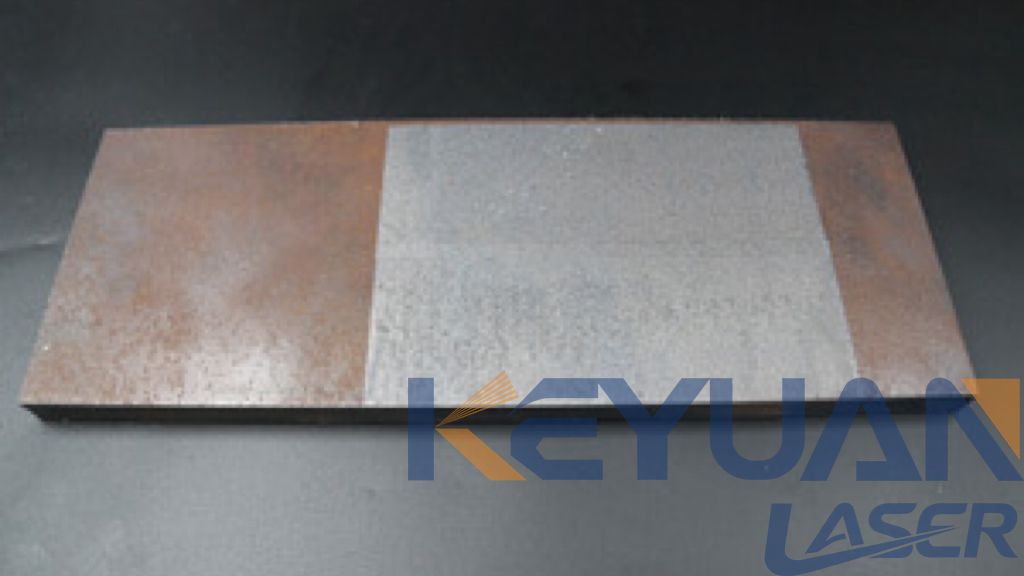
Any serious supplier will clean a piece of your own material before you order. Make that test count, because it answers every question this article has raised.
Send three parts if you can: one typical, one worst case, and one thin or delicate. Ask for the average power and the spot size used, and count the passes yourself. Time how long your typical part takes, then multiply by your monthly volume. That number, not the wattage on the label, is what you are really buying.
Watch how a wide-area cleaning head behaves on a large flat plate as well. Wide area work is where real throughput shows up, and where the power class you thought was plenty starts to look thin.
FAQ
Is 200 W enough to remove rust?
For surface rust, yes, in a single pass at a walking pace. Deep pitting is a different job. There the rust sits inside the metal rather than on it, and no power setting lifts it out without taking good metal with it.
Should I buy 1000 W to be safe?
Only if you have powder coat, thick coatings or very large parts. For most fabrication shops a 300 W machine does the work, and a 1000 W machine simply costs more to buy, more to power and more to move around the shop.
Does more power mean faster cleaning?
Up to a point, and then heat and handling take over. Above roughly 500 W the limit is usually how fast a person can move the head, not how much power the source has.
What about three-phase power?
A 1000 W class machine normally wants a proper three-phase supply on its own circuit. Confirm that before you order, because running a new supply can cost as much as the step up in power did.
label:
related news


E-mail address:
Hotline:
Copyright © 2012-2026 Keyuan Laser All rights reserved