English
 Français
 Deutsch
 Русский
 Türkçe
 Español
 لالعربية
 Português
 Italiano
 ไทย
Laser Cleaning Machine vs Sandblasting, Chemicals and Dry Ice
release time:
2026-10-12
How laser cleaning compares with sandblasting, chemicals, dry ice and wire brushes on cost, speed and what each one does to the metal underneath.
Every shop that looks at a laser cleaning machine asks the same question first. Is it cheaper than what we already use? The honest answer is that it is not cheaper per square metre than a sandblaster. It is cheaper once you count what a sandblaster quietly costs you.
Here is the comparison, method by method.
The Five Ways to Strip a Surface
Sandblasting, chemical stripping, dry ice blasting, wire brushing or grinding, and laser cleaning. Each one is the best answer to a different question, and the mistake is buying one and expecting it to win at all five.
The useful way to choose is to start from the part rather than the process. How thick is the metal, how much of it can you afford to lose, how fast do you need it, and where does the waste go? Those four questions usually point at one method on their own.
Head to Head: What Each Method Costs
| Method | Typical running cost | Speed on flat steel | Consumables and waste |
|---|---|---|---|
| Sandblasting | Low | Very fast | Grit, dust, disposal, PPE |
| Chemical stripping | Medium | Slow, with soak time | Chemicals, neutralising, waste licence |
| Dry ice blasting | High | Medium | CO2 pellets, but no secondary waste |
| Wire brush or grinding | Low | Slow | Discs, and it takes metal with it |
| Laser cleaning | Medium | Medium to fast | Electricity only |
The cost that never reaches a quote is disposal. Spent grit and chemical sludge count as hazardous waste in most places, and the paperwork is a monthly cost you cannot see on the machine price.
Labour is the other invisible line. Blasting is fast on the part but slow on the setup, because someone has to mask, suit up, and then clean the surrounding area afterwards. Laser cleaning is slower on the part and much faster on the setup. For one-off or small batch work, that reversal is what decides the job.
What Each Method Does to the Metal
| Method | Effect on the substrate | Best on | Fails on |
|---|---|---|---|
| Sandblasting | Profiles and removes metal | Heavy rust, thick scale | Thin sheet, precision parts |
| Chemicals | Etches if left too long | Complex shapes and interiors | Tight deadlines, mixed metals |
| Dry ice | Gentle, leaves no residue | Electricals, moulds, food plant | Heavy rust |
| Wire brush | Scratches and thins | Small touch-ups | Anything that must look new |
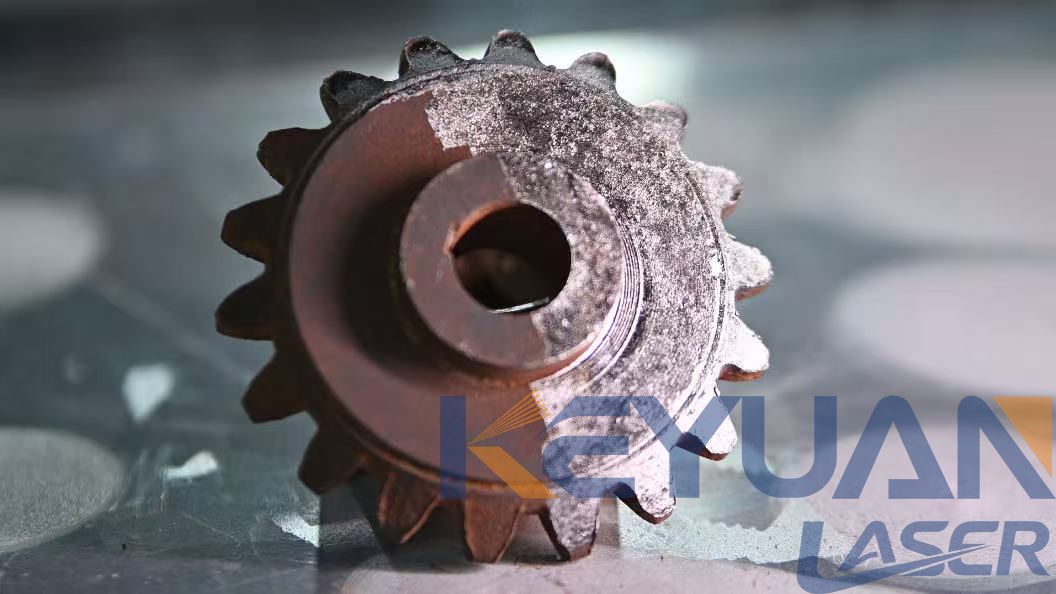
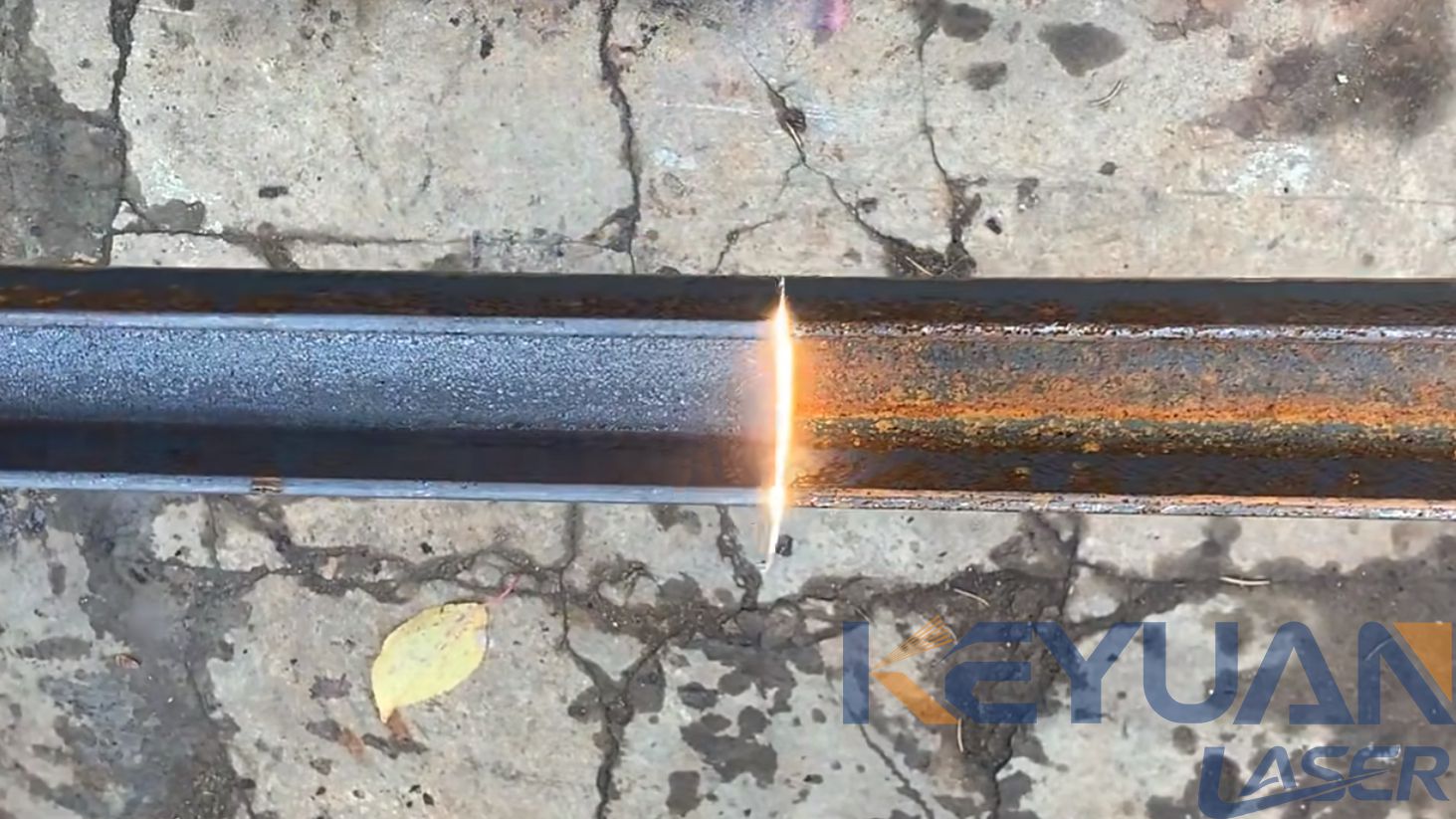
| Laser cleaning | Leaves the base metal intact | Rust, paint, oxides, weld prep | Very thick scale and deep pits |
This is where laser cleaning earns its place. A pulsed laser cleaning machine lifts the oxide layer and stops at the metal, so a 1 mm panel is still a 1 mm panel afterwards. Grinding cannot promise that, and a heavy blast cannot either.
Think about what that is worth on your own parts. Cleaning a weld seam before welding? Removing 0.05 mm of steel does not matter. Cleaning a machined flange, a calibrated surface or a thin panel that took an hour to form? Then it matters a great deal, and it is the whole reason this method exists.
There is one nuance worth knowing if you paint afterwards. A blast does two jobs at once: it cleans, and it cuts a profile into the steel that paint grips. Laser cleaning leaves the metal smooth, so on a coating line you may still need a light sweep or a primer made for smooth steel. Treat the laser as a replacement for the cleaning half of your prep, not for all of it.
What You Need Around It
A laser cleaner is not a plug-and-play tool. Budget for three things before you buy.
Extraction, because the plume has to go somewhere and nobody wants it in the shop air. Eye protection rated for the laser wavelength, not just any safety glasses. And enough power at the wall, because a high power unit draws serious current and older workshop wiring often cannot take it.
Add a few hours of operator training and that is the whole list. It is a shorter setup than a blast cabinet or a chemical line, which is part of the appeal.
Where Laser Cleaning Still Loses
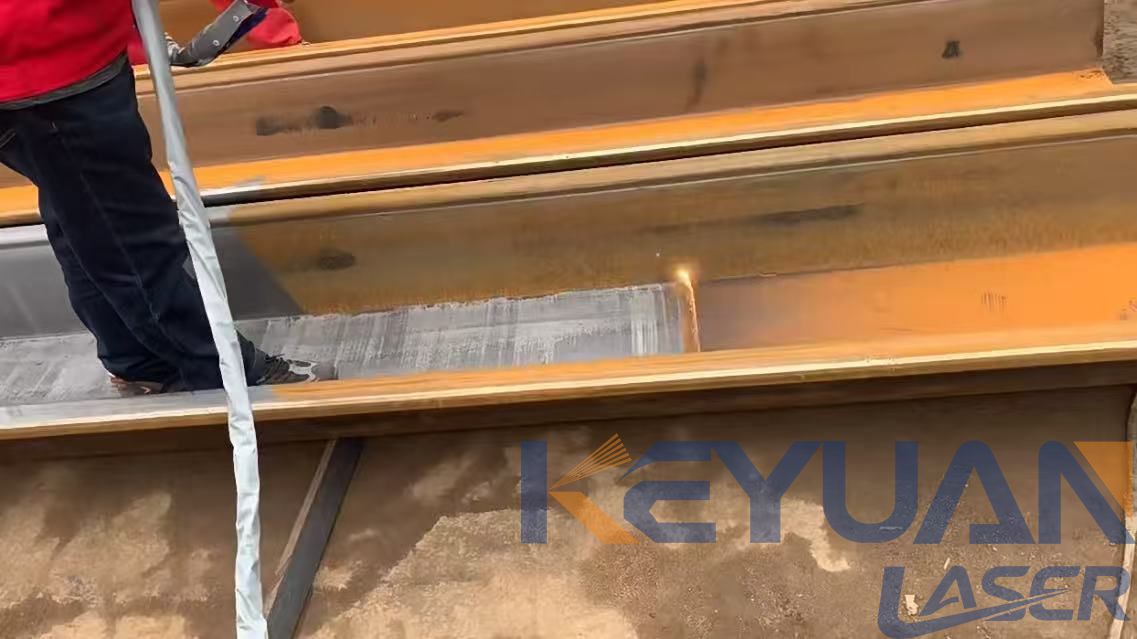
Be honest about the gaps. Very heavy rust or millimetre thick scale is slow work for a laser, and a blast cabinet will beat it comfortably. Large flat areas are a volume game as well. That is where a continuous laser cleaning head earns its keep, because a wide beam does more for your hourly rate than a few hundred extra watts. The wide-area cleaning heads we build exist for exactly that job.
Budget is the other gap. The machine costs more up front than a blast pot. It pays back on labour, on waste disposal and on the parts you no longer scrap, not on the purchase price itself.
Rough steel, cleaned by the ton, is still a blasting job. That has not changed.
FAQ
Is laser cleaning cheaper than sandblasting?
Not per square metre. It becomes cheaper when you add up the grit, the disposal, the PPE and the parts a blaster damages. On thin or precision parts it usually wins outright.
Can it remove thick paint?
Yes, but in passes. A few coats come off quickly, while a thick powder coat or a build-up of paint takes patience and the right settings. Blasting is still faster on very heavy coatings.
Does it damage the metal underneath?
Used properly, no. That is its main selling point. The beam lifts the oxide and stops at the base metal, so thin sheet keeps its thickness and its finish.
Is it safe to use in a workshop?
Safer than chemicals and grit in most respects, but not risk free. You still need eye protection rated for the wavelength, extraction for the fume, and a controlled area. Treat it as a laser, because it is one.
The Short Version
Laser cleaning is not the cheapest way to strip steel. It is the cleanest, and it is the only method that leaves the base metal exactly as thick as it found it. If your parts are thin, precise or expensive, that difference pays for itself. If you are blasting rough steel by the ton, keep the blast pot.
label:
related news


E-mail address:
Hotline:
Copyright © 2012-2026 Keyuan Laser All rights reserved