English
 Français
 Deutsch
 Русский
 Türkçe
 Español
 لالعربية
 Português
 Italiano
 ไทย
What a Laser Welding Machine Can and Cannot Weld
release time:
2026-10-12
Which metals, thicknesses and joints a laser welding machine really handles, plus the four jobs where you should keep the TIG set plugged in.
A laser welding machine is sold on one promise: clean, fast, low heat welds on thin metal. The promise is real. It just holds for a specific list of metals, and outside that list the machine does not fail loudly. It gives you a weld that looks fine and cracks next week.
So here is the list, honestly.
Start With the Metal
Forget the spec sheet for a moment and ask what the machine will be pointed at. Laser welding is an absorption game. The beam has to be taken in by the surface instead of bounced off it. Mild steel and stainless absorb well. Aluminium reflects most of the beam. Copper reflects nearly all of it. That one difference explains almost every complaint people have about laser welding.
The practical test takes an afternoon. Cut coupons of every metal your shop actually runs, in the thicknesses you actually run, and put a bead on each one. Read the weld instead of the brochure. Two hours of testing will tell you more than a week of comparing spec sheets, and it costs you a few offcuts.
What It Welds Well
| Metal | How it behaves | What to watch |
|---|---|---|
| Mild steel | Easy and forgiving | Rust and mill scale spoil the weld |
| Stainless 304 and 316 | Clean, tight, low distortion | A dirty joint gives you porosity |
| Galvanised steel | Welds fine | Zinc fume, so extract it properly |
| Aluminium | Welds, but wants more power | Reflects the beam; expect tuning |
| Copper and brass | Possible on thin sections | High reflection, high power needed |
| Titanium | Excellent in an inert box | Oxygen ruins the weld |
| Steel to stainless | Common and reliable | Choose filler for the weaker side |
Notice which metals sit at the top. They are the ones that soak up the beam, which is why a laser welder feels effortless on stainless and fussy on aluminium.
Where It Fights Back
Three honest limits.
Thickness comes first. Above about 6 mm in a single pass you are asking a lot from a handheld unit, and the weld starts to look like TIG on a bad day. The answer is a bevel and two passes, or a bigger machine, not more optimism.
Reflective metals come second. Aluminium welds, but it needs more power and some patience. Copper is the one that humbles people. If either metal is more than a tenth of your work, test it before you buy.
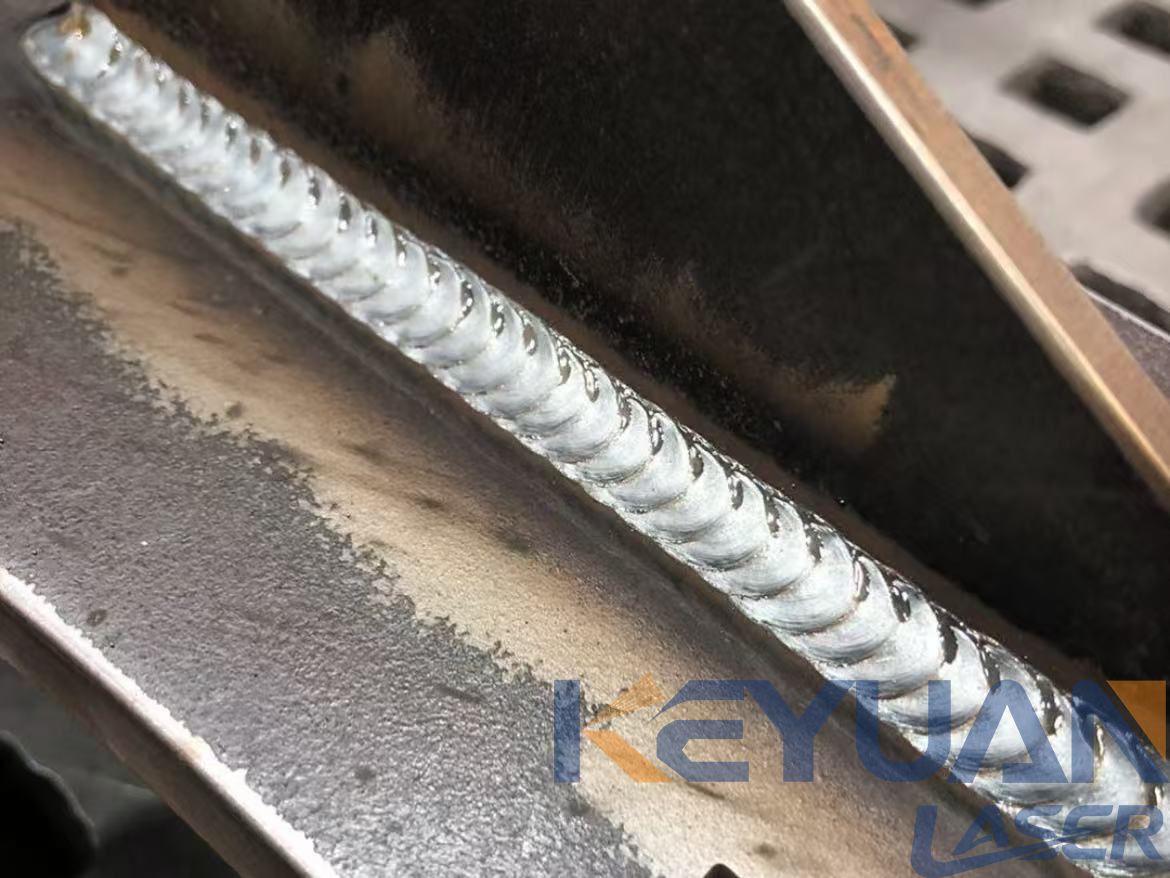
Contamination comes third. Paint, oil, rust and plating all sit between the beam and the metal. Laser welding is far less forgiving of a dirty joint than MIG is, which is one reason welders coming from MIG are surprised by how much of the day they now spend cleaning.
There is a fourth limit that rarely gets mentioned: filler wire. A laser welder uses very little of it, which is a saving on thin sheet and a problem on joints that genuinely need metal added. If your work is mostly wide gaps, you will be feeding wire by hand and losing the speed advantage entirely.
Thickness and Joint Type Matter More Than Power
| Setup | Fit-up you need | Realistic result |
|---|---|---|
| 0.5 to 2 mm butt | Gap under 0.2 mm | Excellent, with minimal distortion |
| 2 to 4 mm fillet | Gaps under 0.5 mm | Very good with a little practice |
| 4 to 6 mm | Bevel or two passes | Works, but TIG keeps up |
| Over 6 mm | Multi-pass, sometimes preheat | You probably want TIG or a bigger machine |
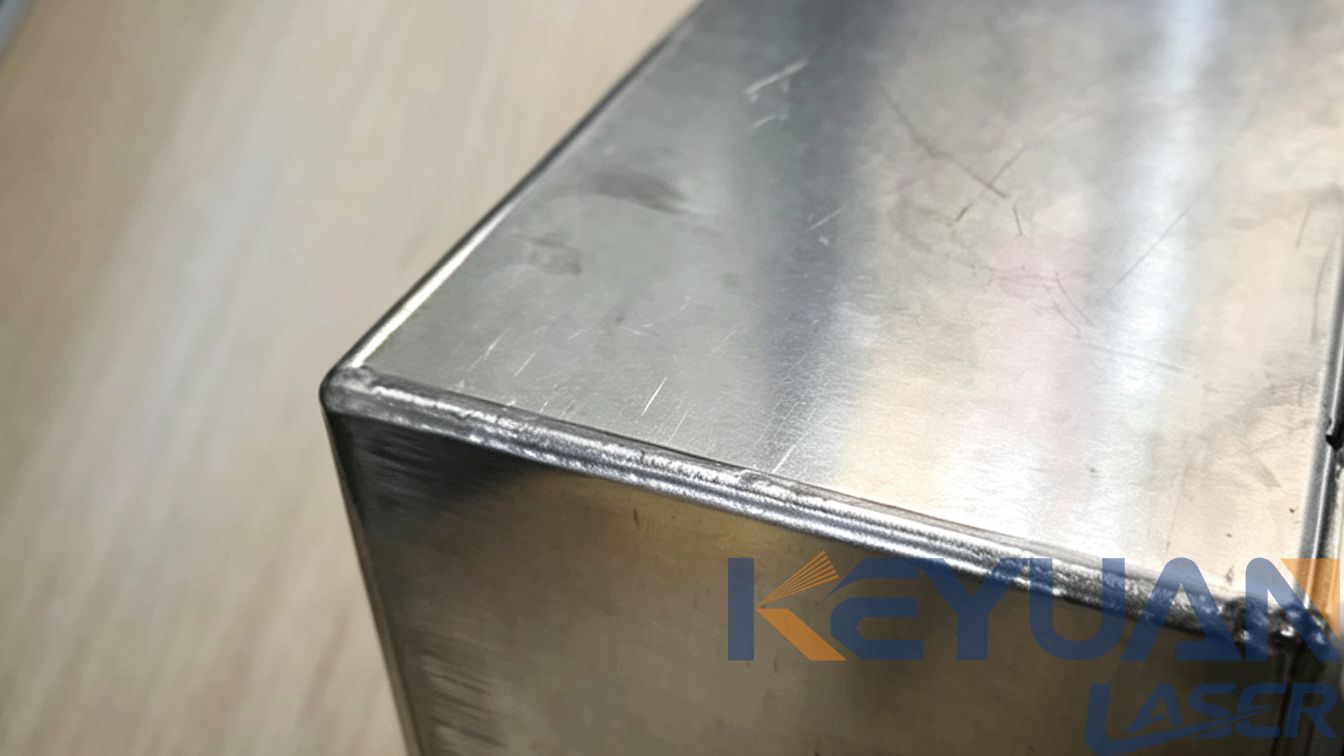
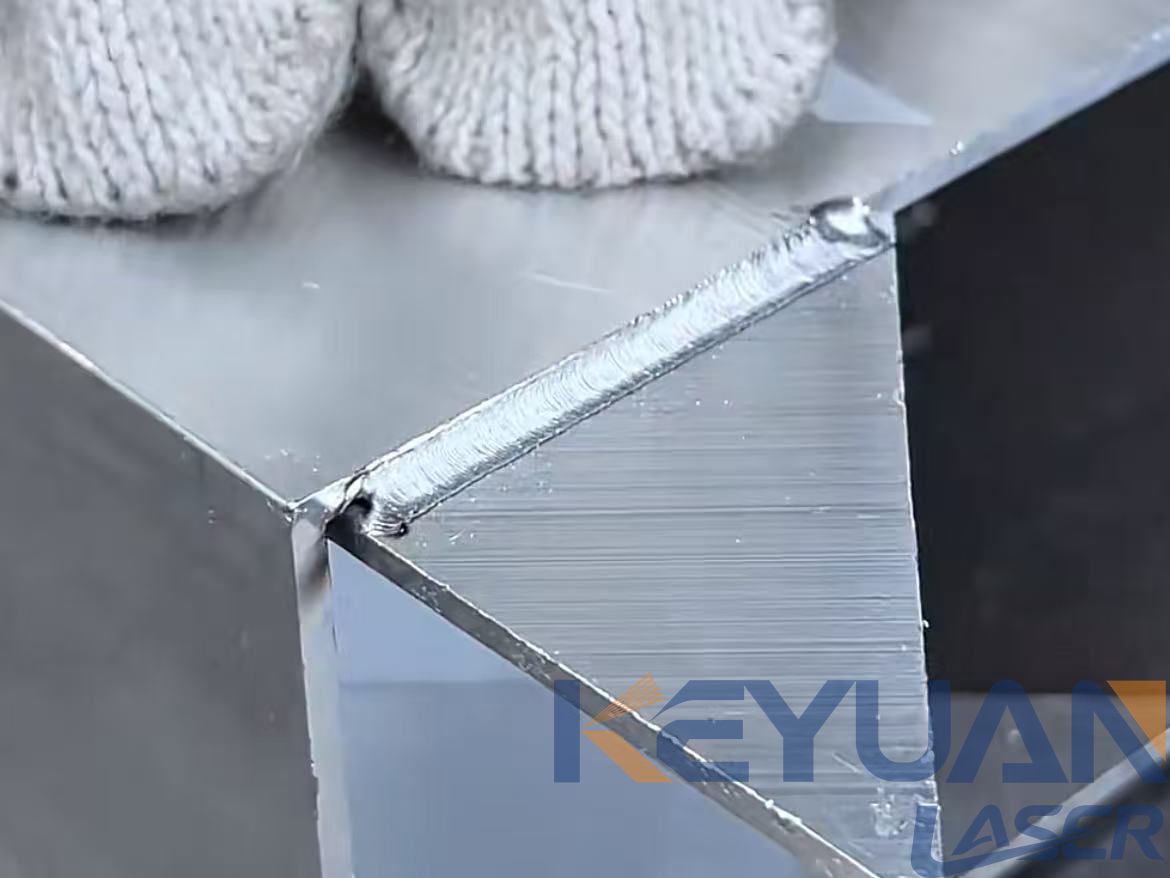
The pattern is simple. Laser welding rewards good fit-up more than it rewards power. A tight 1 mm joint on a 1500 W machine beats a sloppy 4 mm joint on a 3000 W machine every time. If you want to see how that plays out on real work, thin stainless cabinet seam welding is the classic case.
That is the part nobody warns you about. Coming from MIG, the temptation is to buy more power to cover sloppy fit-up. More power does not close a gap. Better cutting and a jig do.
Four Jobs to Keep the TIG Set For
Thick structural work, one-off repairs where you cannot get the part clean, deep V-groove work that needs a lot of filler, and anything outdoors in the wind. None of that is a failure of laser welding. It is simply the edge of what a handheld unit does well.
Where laser welding wins is steady work on thin, clean, repeatable parts. A shop running thin panels or on-site metal repair work sees the return long before a general fabricator does.
Keeping both machines is normal, and it is cheaper than it sounds. A TIG set that sits idle most of the week still earns its space the day a thick repair arrives with a deadline on it.
One more thing worth knowing before you buy. Heat builds up in the gun, so duty cycle matters more than the brochure suggests. A water-cooled laser welding head will run all day on a production line without the gun getting hot.
Buy a handheld laser welding machine with the wrong duty cycle and it becomes the bottleneck in the third hour, not the first.
FAQ
Can a laser welder weld aluminium?
Yes, with a caveat. Aluminium reflects most of the beam, so it needs more power and more tuning than steel. Thin sections weld beautifully, thick sections take multiple passes, and you should always test your own alloy before committing.
Can it weld copper?
Thin copper is possible on high power machines, but copper reflects nearly all of the beam and heat builds quickly. For most shops, copper stays a TIG job.
How thick can a handheld laser welder go?
Two to four millimetres is the comfortable working range and 6 mm in a single pass is a practical ceiling. Beyond that you are beveling and running multiple passes, where TIG is often the saner choice.
Can it weld two different metals together?
Often, yes. Steel to stainless is routine. Choose the filler wire for the weaker of the two metals and test a sample joint first, because some pairs still need a specialist process.
The Short Version
Laser welding is excellent on clean, thin, repeatable work in steel, stainless and most common metals. It struggles with thick sections, dirty joints and the most reflective metals. Match the machine to the metal and the thickness, keep the TIG set for the outliers, and the numbers work.
label:
related news


E-mail address:
Hotline:
Copyright © 2012-2026 Keyuan Laser All rights reserved