English
 Français
 Deutsch
 Русский
 Türkçe
 Español
 لالعربية
 Português
 Italiano
 ไทย

Water-Cooled Laser Welding Machine: When the Chiller Pays Off
release time:
2026-10-15
What a water-cooled laser welding machine really buys you, how to look after the chiller, and the shops that should stay air-cooled instead.
An air-cooled welder is fine until about the fourth hour. Then the seam that ran at full speed all morning starts to slow, and the operator stands there waiting for the fans to catch up.
That pause is what a chiller removes. A water-cooled laser welding machine is not a stronger machine in a nicer box. It is the same source held at its rated power from the first part to the last. Whether that is worth a second box on the floor and two hoses between them is the only question worth asking.
What the Chiller Actually Buys You
A water-cooled laser welding machine moves heat out of the source with a pumped water circuit instead of fins and fans. Water carries heat away far better than air does, and that is the whole point: the source never gets hot enough to protect itself.
Plain version. Air cooling sets a time limit, water cooling removes it. An air-cooled unit delivers its rated power for a while and then steps down. A water-cooled unit of the same rating delivers it at eight in the morning and still delivers it at five in the afternoon.
What you pay for that is space and plumbing. The chiller is a second box about the size of a small suitcase, joined to the welder by two hoses. On site work that is a real cost; in a fixed bay it is nothing.
Where Water Cooling Is the Only Real Answer
Three working patterns decide it for you.
The first is all-day welding on 3 mm and up. Steel that thick needs enough energy to form a proper keyhole, and a keyhole weld runs long. Air cooling was never built to sit at that power for six hours.
The second is production. A cell with two or three welding stations and one chiller is a normal layout, and it is the reason water cooling exists at all. Fans cannot do that job.
The third is heat you cannot get away from. A bay at 40 C with no air movement asks an air-cooled source to dump its heat into air that is already hot, so it de-rates at exactly the moment you are busiest.
If any of those describes your floor, the laser welding machine you want is water-cooled, and the chiller is not an accessory you can skip.
Water cooling does not have to mean a bench machine. A handheld laser welding machine can be water-cooled and still move around the bay on a trolley.
Duty Cycle and Thickness in Numbers
| Your working day | Air-cooled result | Water-cooled result |
|---|---|---|
| 1.5 mm stainless, 2 m of seam a day | Full power all day, no waiting | Same output, and the chiller is money you did not need to spend |
| 3 mm steel, three to four hours of seam | Slows after about forty minutes, recovers on breaks | Full power from first part to last |
| 5 mm plate, multi-pass fill, six hours | De-rates hard, close to half output by mid-afternoon | Holds its rating, so the source sets your ceiling rather than the heat |
| Two guns running on one bench | Not practical | One chiller feeds both heads, which is the usual layout |
| Unventilated bay at 40 C | Deep de-rating every afternoon | Chiller works harder, rating still holds |
Read that row twice. Multi-pass fill on 5 mm plate is the pattern that pushes most buyers from air to water, because the pause between passes is not a pause you can schedule. It arrives when the machine decides, on a part you are already committed to.
The figure to ask a supplier for is duty cycle at your summer workshop temperature, not at 25 C. A unit that advertises continuous output in a showroom may hold it for only a few minutes in a hot bay, and that gap is where quotes quietly go wrong.
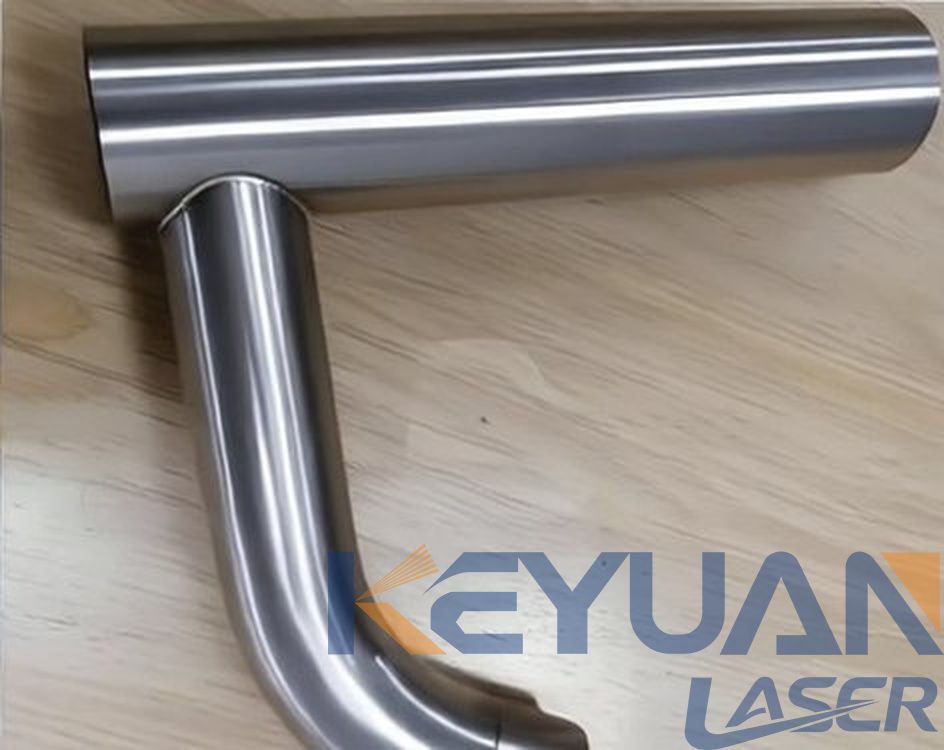
Living With a Chiller: Water, Filters and Winter
A chiller has a short maintenance list, and nearly every problem we hear about comes from skipping it.
Use distilled or deionised water, never tap water. The minerals in tap water scale the inside of the circuit, and a scaled circuit is a cooling system that slowly stops cooling. The machine then de-rates for reasons that look like a fault but are not.
Change the water every three to six months, and clean the air filter more often in a dusty shop. Leave space around the chiller, because a unit pushed against a wall with a box of offcuts on top will not shed heat properly.
Set the temperature rather than guessing at it. Most shops run a set point near 25 C. Push it much lower and you risk condensation on cold hoses in a humid workshop, which is worse than running a couple of degrees warmer.
Winter is the one to remember. If the bay drops below freezing, drain the chiller or run a glycol mix. A cracked circuit found in March costs more than every water change you ever skipped.
When Air Cooling Is Still the Right Call
| Your shop | Correct answer | Why |
|---|---|---|
| Repair work, site visits, a van | Air-cooled | Portable, single phase, nothing to freeze overnight |
| Sheet metal, 1 to 2 mm, short seams | Air-cooled | The duty fits inside the heat ceiling with room to spare |
| Job shop welding 3 to 6 mm all day | Water-cooled | You need full power at hour six, not hour one |
| Production cell, two or more stations | Water-cooled | One chiller serves several heads |
| Bay that sits above 38 C in summer | Water-cooled | Air de-rates where you need it most |
Getting this wrong costs money. Buying a chiller for two metres of seam a day buys a box you have to maintain for no gain in output. Buying an air-cooled unit for six-hour days on thick plate buys a machine that spends the afternoon doing nothing, and that is the more expensive mistake of the two.
Portable air-cooled welders remain the right tool for a large share of small shops. The dividing line is not the wattage on the brochure. It is how many hours a day you intend to be welding.
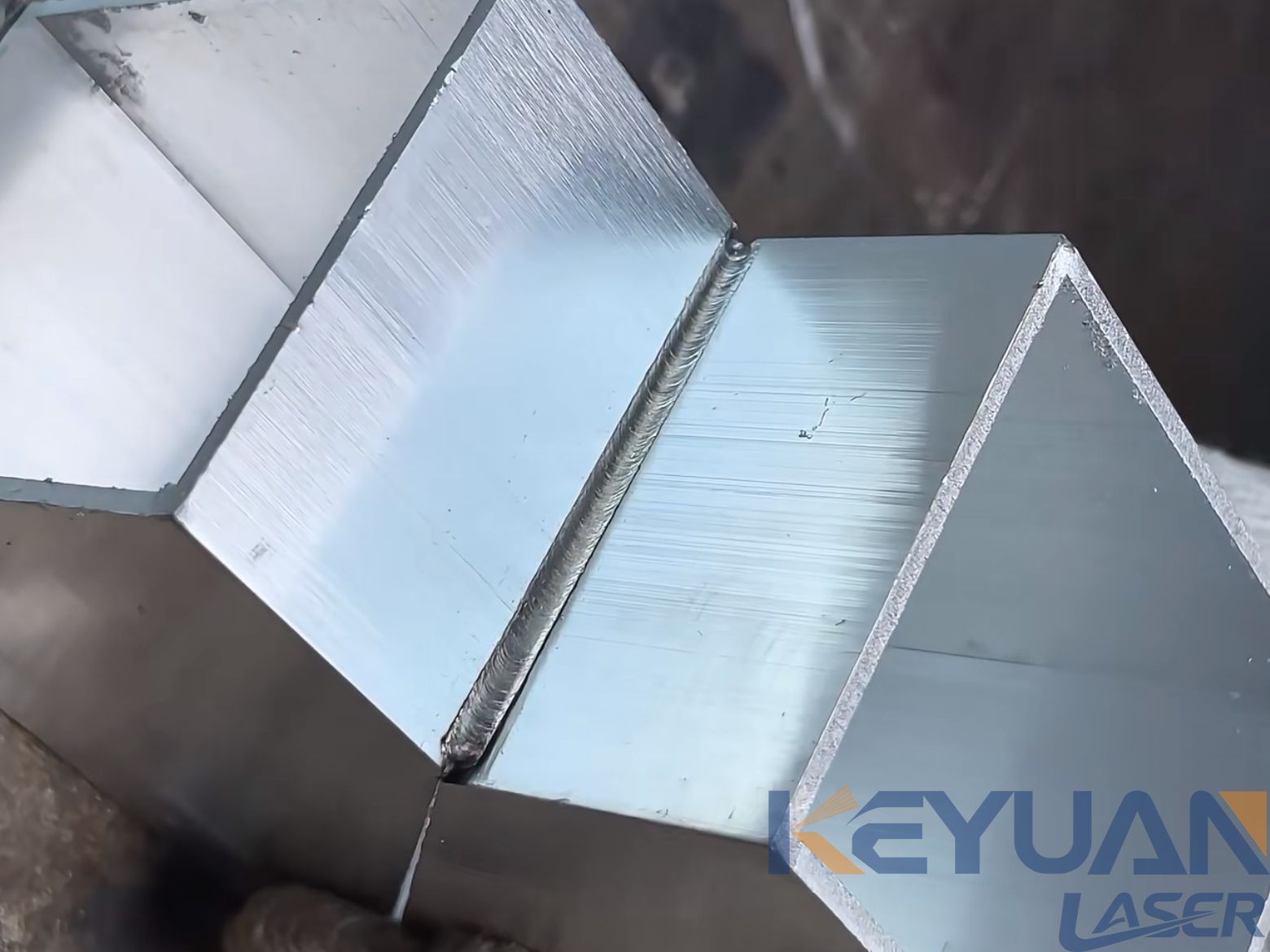
FAQ
How big a chiller do I need?
You do not choose it separately. The chiller ships matched to the source, and the figure worth checking is whether the pair holds full power at your summer ambient temperature. If a supplier cannot put that number in writing, that is what you need before a deposit, not the tank capacity.
Can I use tap water?
No. Minerals in tap water coat the inside of the cooling circuit and the cooling fades over a year or so. Distilled or deionised water costs very little and is the difference between a chiller that lasts and one that gets replaced.
How often does the water need changing?
Every three to six months in a clean shop, sooner if the machine runs in a dusty or oily bay. Clean the air filter monthly when the air around it is dirty, because a blocked filter shows up as de-rating that looks like a welder fault.
Is a water-cooled machine hard to move?
Yes, and that is the honest trade. Two boxes and two hoses mean it lives in one place. If the machine has to travel to the customer's floor, water cooling is the wrong choice no matter how much you weld.
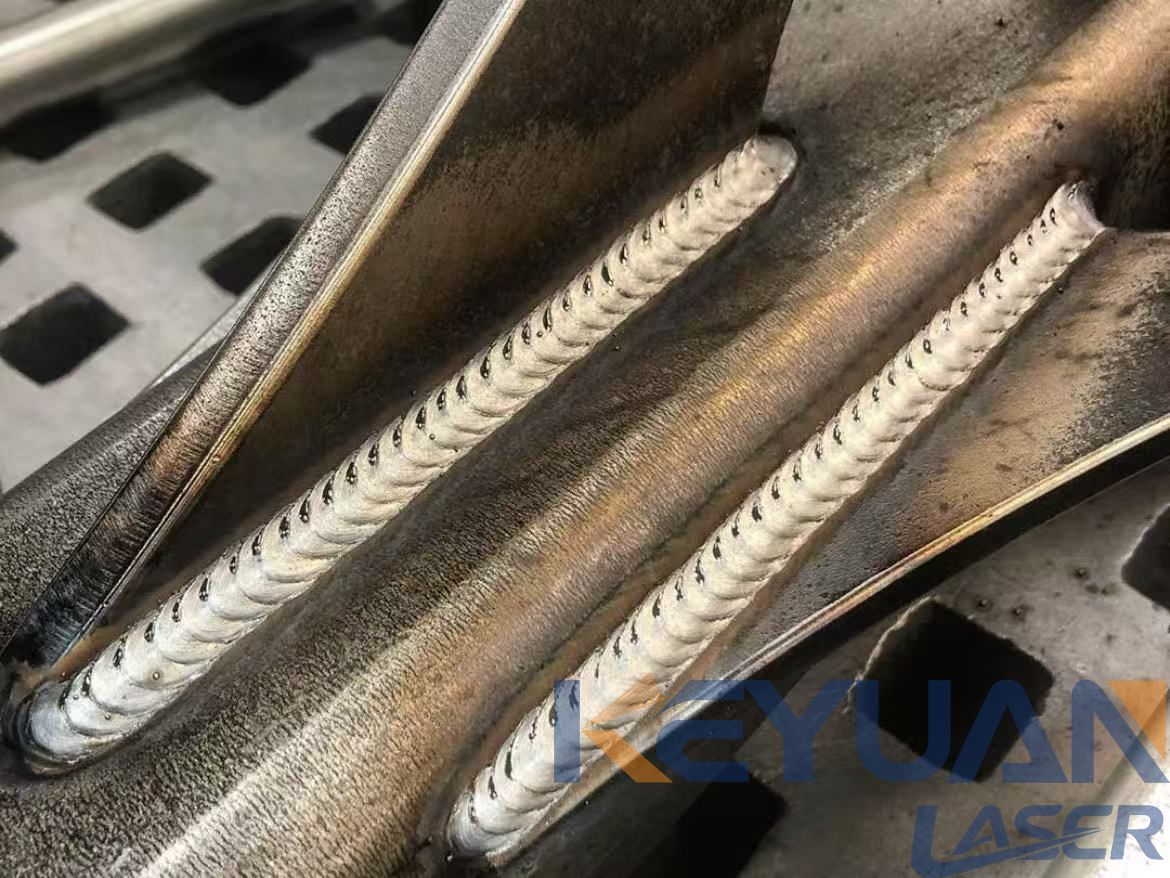
The Short Version
Buy water cooling when the machine has to hold full power for hours on 3 mm and up, when one chiller can feed several stations, or when your bay is hot enough that air cooling de-rates on its busiest afternoon. Buy air cooling when the machine travels, when the material is thin, or when the longest seam you run takes a few minutes.
Then budget for the chiller properly: distilled water every few months, a filter you actually clean, and a temperature you chose rather than inherited. The industrial laser welding systems that run for a decade are not the ones with the biggest source. They are the ones whose cooling was looked after.
label:
related news


E-mail address:
Hotline:
Copyright © 2012-2026 Keyuan Laser All rights reserved