English
 Français
 Deutsch
 Русский
 Türkçe
 Español
 لالعربية
 Português
 Italiano
 ไทย

Pulse Laser Cleaning Machine: Why Pulses Protect Thin Metal
release time:
2026-10-15
Why a pulsed laser cleaning machine protects thin sheet, anodised parts and moulds, how to set pulse width and speed, and when continuous cleaning wins.
A mould shop sent us a photo last winter of an aluminium insert they had cleaned with a cheaper steady-beam cleaner. The insert came back rust-free, which was about the only thing that had gone right. The polished face had gone a dull grey and one edge had lifted.
Nothing was wrong with the machine. It was the wrong kind of light for that part. On thin, polished or coated metal, the difference between a finished job and a scrap part is how long the beam stays on.
What the Pulse Actually Does
A pulse laser cleaning machine does not fire a steady beam. It fires thousands of short bursts every second, and between those bursts the light is off.
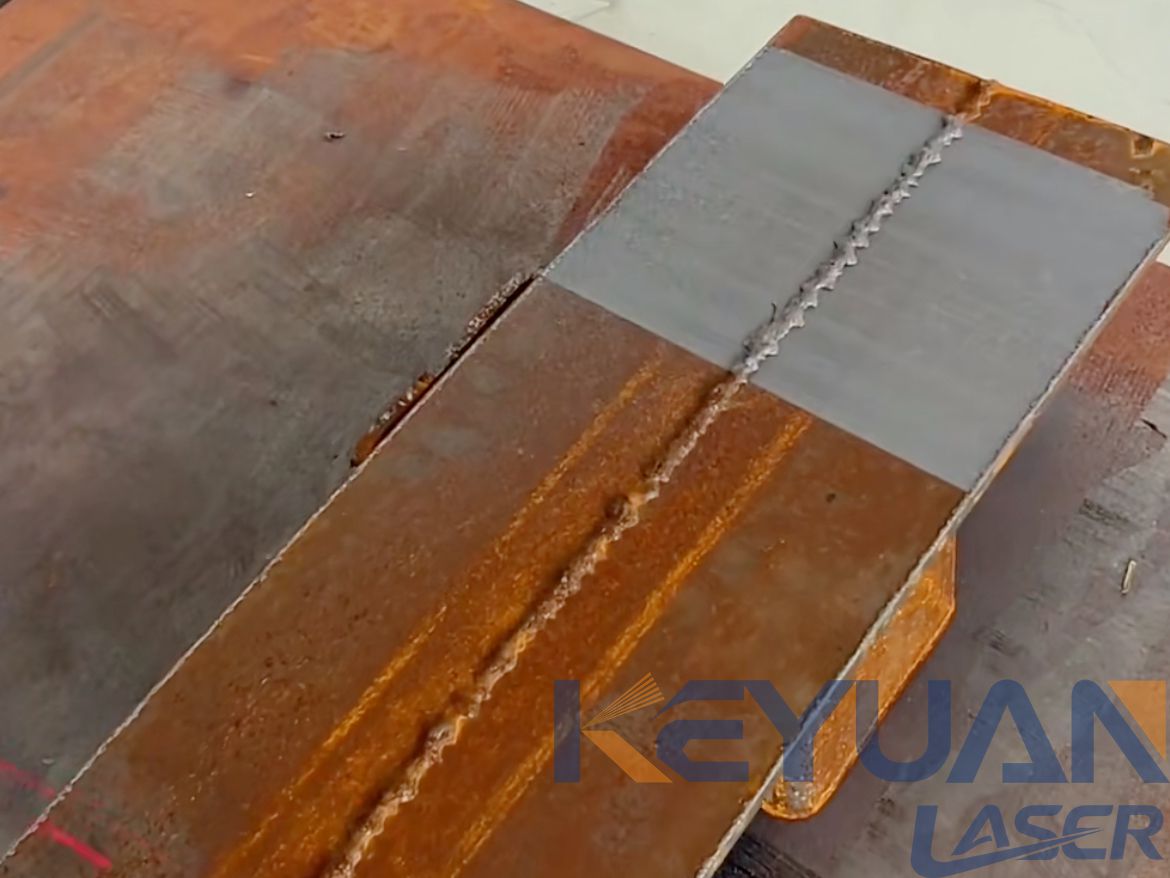
That gap is the whole trick. Heat from one burst has time to spread into the metal and away before the next burst lands, so the surface never builds up the temperature a steady beam creates. Plain version: continuous cleaning cooks the surface, pulsed cleaning lifts the layer of rust or coating and leaves the metal underneath alone.
It is not a small difference. On a 1 mm panel a steady beam can put in enough heat to bow the sheet within a second or two of holding still. The same panel cleaned with short pulses at the same average power comes out flat, because the energy arrives in pieces instead of as a stream.
Pulse Width and Frequency in Plain Numbers
| Pulse width band | What it takes off | Surfaces it suits |
|---|---|---|
| Nanosecond, tens to hundreds of ns | Micron-thin films: oxide, laser scale, coating residue | Anodised aluminium, sheet under 1.5 mm, polished mould faces |
| Microsecond, a few microseconds | Rust, mill scale, thin paint | General workshop cleaning on 2 to 6 mm steel |
| Millisecond and longer | Thick scale, layered paint, heavy carbon | Thick plate and castings, where heat does not matter |
Most handheld machines sit in the microsecond band and let you slide toward the short end for delicate work. So the question to ask a supplier is not the wattage alone. Ask which pulse width the machine actually offers, and whether the setting changes the pulse itself or merely turns the average power down. Some machines advertise a delicate mode that does nothing except dim the beam.
Where a Pulsed Machine Wins
Five jobs come up again and again.
Sheet under about 1.5 mm, where a steady beam warps the panel before the rust is gone. Anodised and painted aluminium, where the coating has to lift before the base metal heats. Injection moulds and tooling, where the whole point of cleaning is to keep the polish. Chrome and plated surfaces, where a second of steady heat can blister the plate. And weld prep on thin tube, where you need a clean surface without thinning the wall you are about to weld.
On all five, a laser cleaning machine running short pulses is not a slower version of the right tool. It is the only version that finishes the job with the part still in tolerance.
Where Continuous Wave Is the Better Buy
| Job on your floor | Better choice | Why |
|---|---|---|
| Thick mill scale on hot-rolled plate | Continuous | You want energy and speed, not delicacy |
| Heavy rust on 3 mm and up | Continuous, or a long pulse | More energy per second means fewer passes |
| 1 mm bright sheet with light oxide | Pulsed | Heat escapes between bursts, so the panel stays flat |
| Anodised or painted aluminium | Pulsed | The coating lifts before the base metal heats |
| Polished mould or die face | Pulsed | Preserves the polish and avoids micro-melting |
| Weld prep on thin tube before paint | Pulsed | Cleans without thinning the wall |
The pattern is worth remembering. A steady beam wins wherever the metal is thick enough to soak up heat without caring, and wherever you want the job over quickly. Pulses win wherever the metal is thin, shiny, coated or polished, which usually means the part is worth more than the time a steady beam would save.
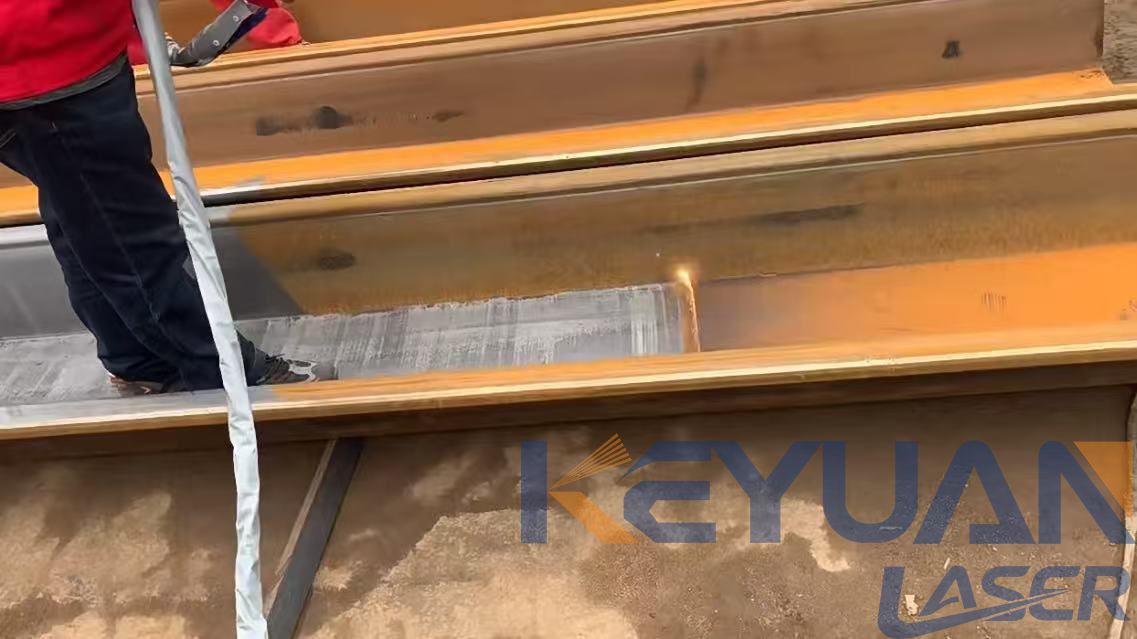
That is also why both types get sold. A shop cleaning hot-rolled plate and a shop cleaning anodised housings are not doing the same job on different budgets. Where the work is mostly scale and paint on thick steel, a fixed-head continuous laser cleaning line is cheaper per square metre than any handheld unit, pulsed or not.
Settings to Start From
Start low, move fast, and raise the power only when the surface is genuinely stubborn.
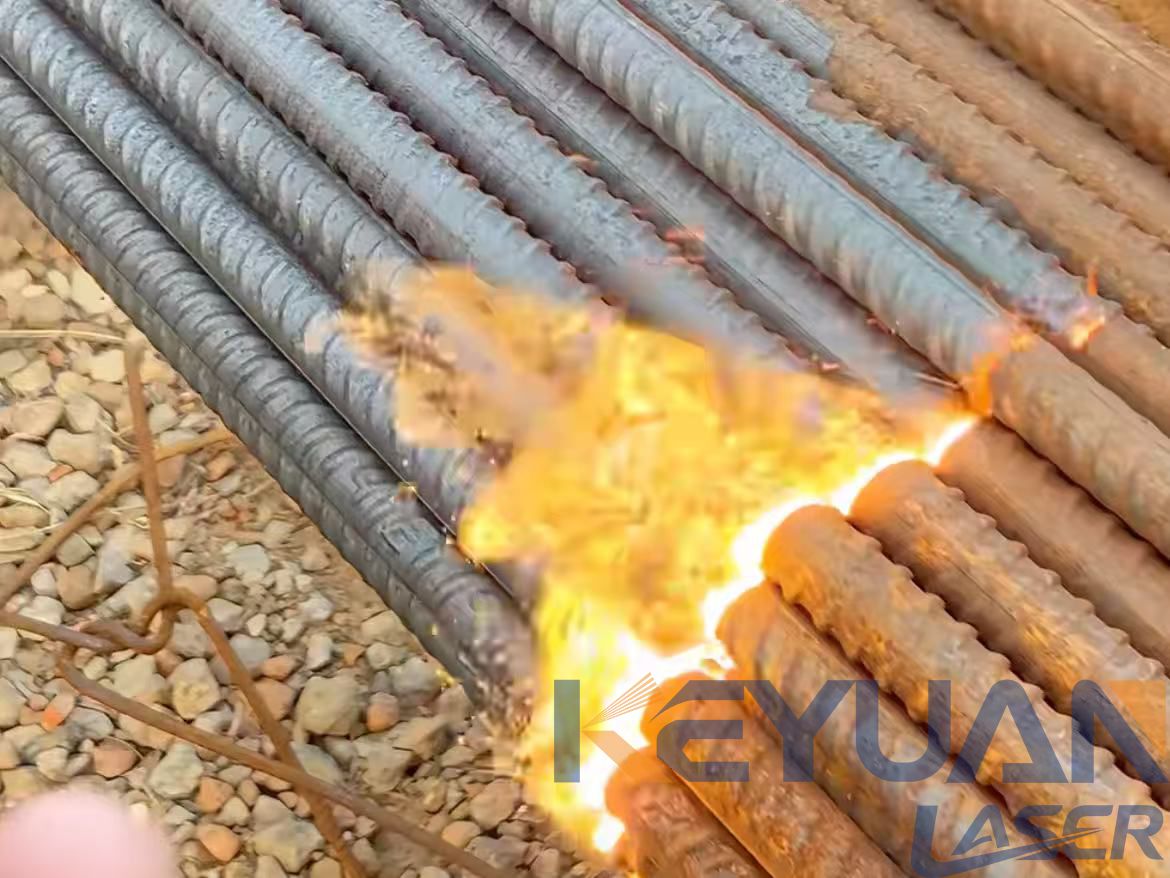
A usable starting point on 2 to 3 mm steel is moderate power, a mid frequency and a travel speed around one to two metres a minute. If the metal stays clean, keep going. If it turns blue, straw or grey, you are heating the part rather than cleaning it, and the fix is to move faster or turn the power down rather than add another pass over the same spot.
Frequency is the setting most people misunderstand. Raising it means more pulses land on the same centimetre of surface, which means more overlap and more heat. Lower it for delicate parts. Travel speed does the same job from the other direction.
Test on scrap from the same batch as your part. Two sheets of the same grade can behave differently once one has been pickled and the other has not, and five minutes on an offcut is cheaper than a warped panel.
FAQ
Does pulsed cleaning remove metal along with the rust?
It removes the layer you point it at, and the pulse is what stops it going deeper. The real risk is not the pulse, it is holding the gun still. Any cleaning head parked in one spot will heat the panel, pulsed or not, so keep it moving.
Can one machine do both pulsed and continuous?
Many handheld units switch between the two. Ask what the switch actually changes. If it only lowers average power, you have a dimmer rather than a different cleaning mode, and delicate parts stay at risk.
Is pulsed cleaning slower?
On thick scale, yes, and there is no way round it, because you are trading speed for control. On thin, coated or polished parts it is often faster overall, since you stop making scrap and stop needing a second finishing step.
Is it louder?
The pulse lands as a sharp crack against the surface, and on hard materials it is loud enough to want ear protection even on a short job. Continuous cleaning is quieter but puts more heat into the part, so you trade one problem for another.
The Short Version
Pulsed cleaning exists for the parts where heat is the enemy. If you clean thin sheet, coated or anodised aluminium, moulds or plated surfaces, the pulse setting is what keeps the part usable, and wattage comes second.
If your work is heavy rust and scale on plate you are going to paint anyway, buy the continuous option and take the speed. The mistake we see most often is a shop buying one machine for both jobs and leaving it on continuous for everything, which is how a delicate part ends up in the scrap bin with a beautifully clean surface.
And if your mix is mostly thick steel rather than delicate parts, look at the fixed rust and paint removal installations before you buy a gun at all.
label:
related news


E-mail address:
Hotline:
Copyright © 2012-2026 Keyuan Laser All rights reserved